Trump’s immigration policy: Global threats and domestic messaging
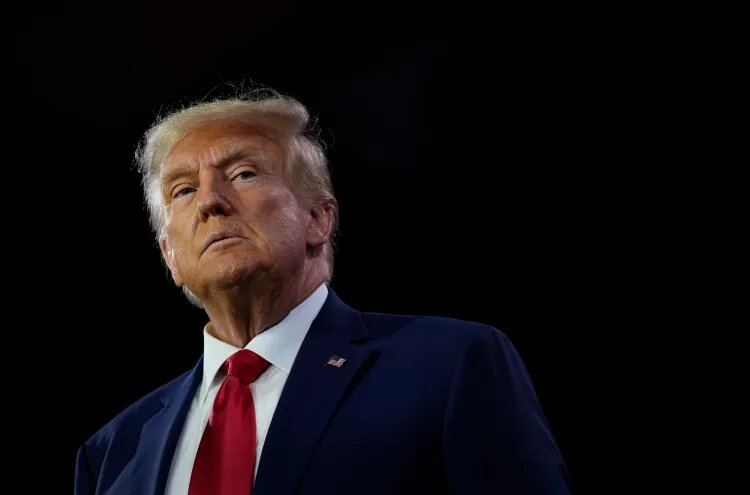
TEHRAN - In 2017, President Donald Trump’s immigration agenda marked a turning point in U.S. policy—delivering a jarring shock through travel bans, stricter border enforcement, and steep refugee limits. His most recent announcement in late 2025, declaring a “permanent pause” on migration from so-called Third World countries, represents the most radical extension of this trajectory so far.
This unprecedented move, framed by the Trump administration as a response to national security concerns, underscores how immigration has evolved from a domestic policy issue into a strategic instrument shaped by global threats and internal political messaging within an anxious and polarized American society.
For decades, the U.S. viewed immigration—especially of skilled, ambitious individuals—as a tool to build and maintain global leadership. In 1961, President John F. Kennedy declared that America would “pay any price” to ensure the success of liberty. Yet, a few decades later, the U.S. could no longer insist on immediate global dominance. Rising powers have altered the geopolitical balance. The unipolar moment of the post-Cold War era has passed.
Today’s world is distinctly multipolar. Acknowledging this new reality does not mean equal power among nations—it means recognizing the complex, interconnected geopolitical dynamics of the 21st century. States simultaneously cooperate and compete, leveraging one another’s vulnerabilities across diplomatic, economic, and security dimensions.
A helpful analogy: if a diplomat from 1880 and another from 1980 were both transported to 2025, the 19th-century diplomat—familiar with multiple centers of power—might better grasp today’s fragmented world than a Cold War-era official trained to think in binary terms.
Recent U.S. intelligence assessments explicitly acknowledge increased coordination among adversarial states—particularly China, Russia, Iran, and North Korea—as a threat to American interests. For the first time, such cooperation is presented as a key national security concern, appearing prominently in the U.S. National Threat Assessment just after domestic security.
This marks a shift in Washington’s strategic awareness. While many American policymakers have long resisted multipolarity—clinging to unipolar or bipolar worldviews—a new generation of strategists now recognizes that multiple power centers not only exist, but are also learning to coordinate in ways that directly challenge U.S. influence.
Trump’s recent high-profile travel bans and immigration restrictions—particularly the ban targeting seven countries, most of which were Muslim-majority or geopolitical rivals—should be understood in this broader context. Far from being random or purely ideological, these bans reflect a preemptive strategy to address “soft threats” entering through non-military means: migration, cultural infiltration, organized crime, or lone-wolf terrorism.
Through this lens, immigration becomes a security concern. The border is not just a geographic line—it’s a symbolic frontline in the contest to preserve national cohesion in an increasingly unstable global system.
On the domestic front, Trump’s immigration strategy served a different but equally calculated purpose: signaling to voters—especially working-class whites—that he was willing to confront perceived threats from within.
A controversial part of this strategy was the deportation of undocumented immigrants, particularly those who overstayed visas. As The Washington Post noted, Trump’s focus on visa overstayers—rather than illegal border crossers—seemed inconsistent, even illogical. The Post interpreted it as a political maneuver to energize nativist sentiments within the Republican base and launch a campaign of high-profile expulsions.
But beyond that surface reading lies a deeper rationale. From a communitarian perspective, states are morally obligated to prioritize their own citizens over non-citizens. Under this philosophy, a government’s primary responsibility is to its domestic population. Trump’s policies, however controversial, resonate with this ethical view—one that clashes directly with globalist ideals of open borders and universal human rights.
When marginalized Americans—especially those hit hardest by economic dislocation—feel ignored by elites, a leader like Trump positions himself as a defender of the national community. His message is stark: “Their country is no good for a reason. Their country stinks. We don't want them in our country.”
By adopting a tough stance on immigration, Trump shields himself and other political elites from domestic backlash over economic inequality, job loss, and demographic anxieties. His policies are not just about national security—they’re performative tools meant to restore a sense of control and order in a chaotic domestic environment.
This approach transforms immigration enforcement into a political symbol—a demonstration of loyalty to a disaffected base and a rebuke of technocratic, elite governance.
Trump’s immigration policy was not simply about border control. It was a two-tiered response to a changing world order: externally, a strategic reaction to multipolar threats; internally, a signal of political solidarity with anxious domestic constituencies.
By reframing immigration as both a geopolitical and cultural threat, Trump offered a coherent—if controversial—vision of national defense. His policies reflect the broader tensions of our era: between global integration and national sovereignty, and between openness and security.
Whether one views these policies as justified protection or xenophobic exclusion, they reveal a deeper transformation in how America sees its role in the world—and who belongs within its borders.
Leave a Comment