Women preserve ‘Tal-o Mahtal’ ritual for rain in Iran’s Qaleh Bala village

TEHRAN – The ancient rain-seeking ritual Tal-o Mahtal, observed in Iran’s Qaleh Bala village, is originated as a community response to recurring desert droughts and continues to be practiced today. The ceremony is listed as part of the national intangible cultural heritage.
Organized by the village’s women, the ritual involves collecting foodstuffs from households, preparing a special rain-requesting soup in the mosque, offering collective prayers and supplications, and distributing the soup among residents. As part of the ceremony, women walk through the alleys carrying handmade dolls known locally as Chooli Chaghoor, chanting the ritual verses of Tal-o Mahtal to invoke rain from the sky.
Repeated droughts and lack of rainfall in Iran’s desert regions, especially in Semnan Province, have always affected the lives of local communities. In such circumstances, traditional rain-seeking rituals emerged as part of folk culture to keep people’s hope and faith alive.
‘Tal-o Mahtal’ has been passed down from mothers to daughters for generations and is still celebrated with grandeur.”
The ritual song “Tal-o Mahtal,” chanted by elderly women, is an important part of the village’s oral heritage, reflecting the continuity of ancient traditions through oral literature. Beyond its religious and spiritual aspects, the ritual embodies social solidarity and collective culture among desert communities.
To perform the ceremony, the women of Qaleh Bala walk through the alleys carrying handmade traditional dolls “Chooli Chaghoor,” while reciting the ritual verses of rain-seeking. “Tal-o Mahtal,” resonating in the voices of village women, forms a vital part of the region’s oral and cultural heritage and is recited as follows:
“Tal-o Mahtal, tonight is spring night, Red tulip flowers cry beneath the soil, O Lord, send rain, send rain, For the sake of the Qur’an, For the shepherds’ staffs, For the farmers’ plows, For the animals’ branches, The wheat lies under the soil, Like pure rice, Dying of thirst, O Lord, send rain, send rain.”
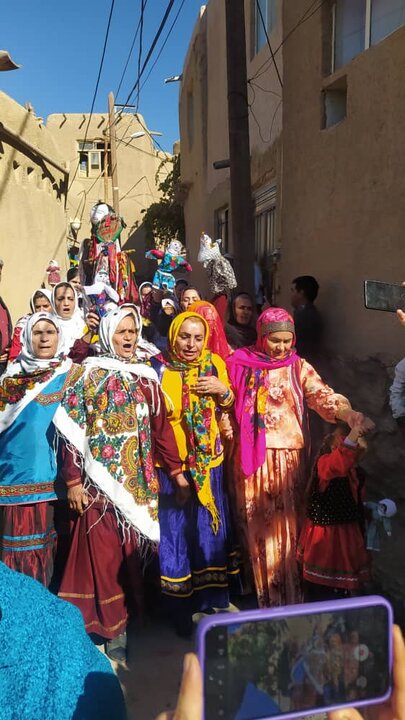
After reciting these verses, the women of the village go to seven houses whose doors face the qibla and collect foodstuffs such as chickpeas, lentils, beans, and herbs for the ritual soup. Then, in the courtyard of the mosque, they prepare the rain-requesting soup together. During the cooking, prayers and supplications are offered with sincere intention for rainfall. The soup is shared among the villagers, and part of it is poured into the qanat as a symbolic act of seeking God’s blessing for abundant water resources.
“Tal-o Mahtal”, beyond its aesthetic aspects, carries profound cultural and spiritual messages. The traditional chant of this ritual, performed by the women of the village, is regarded as an important part of the community’s cultural memory and oral heritage.
“Tal-o Mahtal” goes beyond a simple rain-seeking ceremony; it reflects the deep bond between humans and nature and the effort to restore a sacred relationship between earth and sky. Its continuity demonstrates the strength of oral culture and the vital role of women in safeguarding Iran’s spiritual heritage.
Today, it has also become one of the region’s cultural tourism attractions, offering visitors a multifaceted experience of desert nature and the living traditions of the village.
Preserving and promoting this ritual can strengthen the village’s position as a distinguished destination for cultural and ritual tourism.
This coexistence of tradition and contemporary life serves as an inspiring model for the development of sustainable tourism and offers a valuable opportunity to introduce Iranian culture to the world.
Qaleh Bala, situated in Shahrud county of Semnan province, is at the entrance of Touran National Park, the largest UNESCO biosphere reserve in Iran. The village, with its traditional architecture, historic fabric, and desert landscapes, represents a unique example of the coexistence of humans and nature. Thanks to its ancient rituals, local festivals, and the presence of rare species such as the Asiatic cheetah and the Iranian ground jay, Qaleh Bala has become one of the prominent destinations for cultural tourism and ecotourism.
AM
Leave a Comment