US faces flak at home for testing copy of Iranian drone
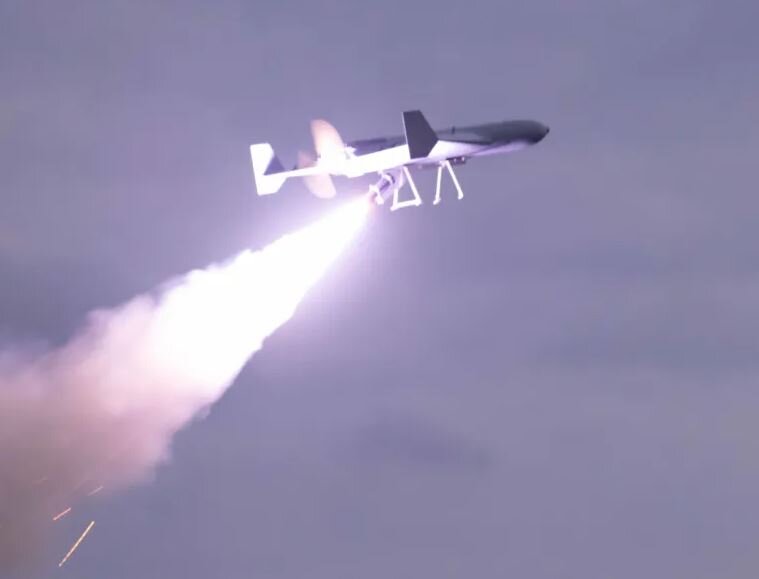
TEHRAN – The U.S. Navy has, for the first time, launched a long-range attack drone from a warship in the Persian Gulf. While the U.S. military hailed this as a step toward optimizing its destabilizing missions in West Asia, American media have viewed it as a sign of Washington falling behind in critical technologies.
The drone fired last week was the Low-cost Unmanned Combat Attack System (LUCAS), unveiled by the Pentagon earlier this year. Both in appearance and according to weapons experts, the LUCAS drone, developed by the American firm SpektreWorks, is a direct result of reverse-engineering the Iranian Shahed-136 drone.
The Shahed-136, first introduced in 2011, was built entirely from scratch by Iranian engineers. Its simple, delta-wing design and use of commercially available components allow for low-cost mass production, with domestic costs estimated as low as $10,000 per unit. According to Iranian accounts, nations across Asia, Europe, Africa, and the Americas have sought to purchase what has become a trendsetting global weapon. The Shahed is regarded as a cheap and effective tool for striking infrastructure and overwhelming air defenses, a capability Iran has already demonstrated in multiple engagements against Israel since 2024.
Unable to purchase these drones from Iran, the United States has resorted to replicating its own. This move has drawn criticism from American analysts and media outlets, who are displeased that the U.S.—for decades the world’s leading weapons innovator—is now taking cues from other nations. U.S. media outlets have noted that the LUCAS is a carbon copy and that almost any pretense of originality or innovation on the part of the Americans is gone. The backlash has increased after The U.S. Navy’s test last week.
In a piece titled “America stole Iran’s Shahed drone—and is now copying it,” The National Interest expressed clear disdain for the direction of the American weapons industry. “The United States has long prided itself on being the most technologically advanced nation in the world. We innovate. Other states imitate,” the magazine wrote. “Today, in many fields, the shoe is on the other foot. This is especially true in the field of unmanned aerial vehicles (UAVs)… The Americans are now pirating Iranian military technology. That alone should make your hair stand up.”
This episode reflects a broader pattern. Analyses from U.S. think tanks and media indicate that the American military now faces specific gaps compared to China and Russia in key technological areas. The U.S. Department of War has explicitly identified six "Critical Technology Areas" it is prioritizing to catch up with its rivals.
In competition with China, the United States lacks the overwhelming industrial capacity and production speed that allows Beijing to outpace it many times over in building missiles, ships, and drones. China is also aggressively closing the gap in foundational next-generation technologies like artificial intelligence and hypersonic missiles.
When it come to Russia, the country maintains a clear lead in fielding operational hypersonic weapons—a capability the United States is still struggling to deploy.
Leave a Comment