Over 12m tons of essential goods imported through Imam Khomeini port in 9 months
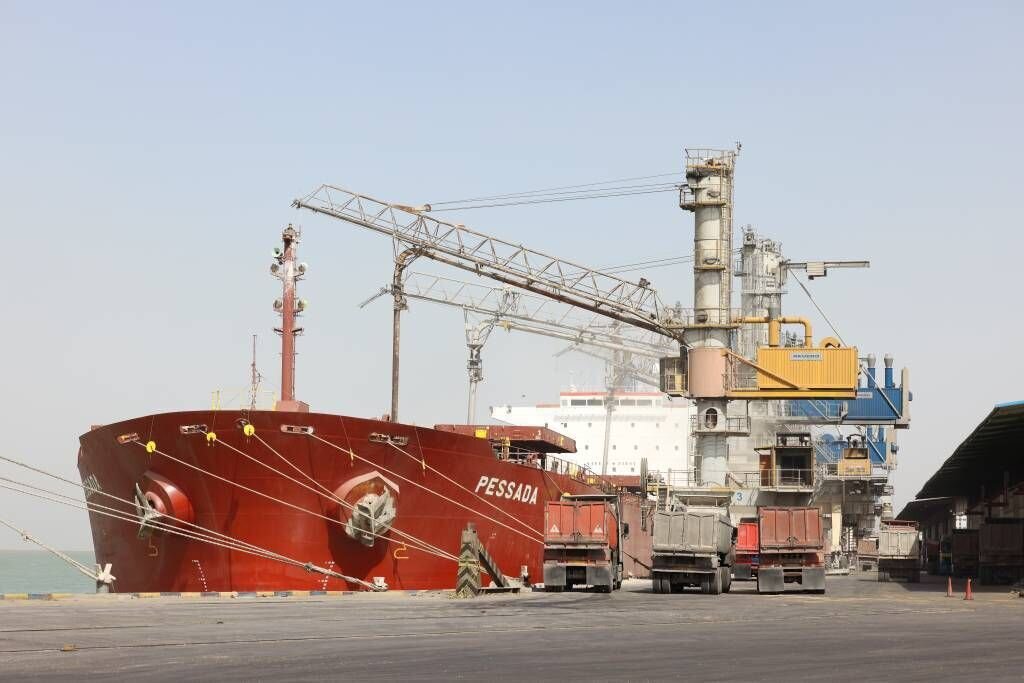
TEHRAN- The Director General of Imam Khomeini Port Customs stated that during the first nine months of the current Iranian calendar year (March 21-December 21), the import of essential goods and livestock inputs through this port reached 12.8 million tons, reflecting a 19-percent increase compared to the same period last year.
Alireza Tavakolfard added: "The value of essential goods imports through this customs office has exceeded $5.326 billion, marking a five-percent growth compared to the corresponding period last year."
He stated: "The total volume of imported goods through this customs office in the first nine months of this year was 14.145 million tons, valued at over $6 billion. This represents a 17-percent increase in weight and a five-percent increase in value compared to the same period last year."
The Director General of Imam Khomeini Port Customs emphasized: "The main imported goods through this customs office were wheat, barley, corn, soybean meal, crude oil, and sugar."
Tavakolfard continued: "Non-oil exports through Imam Khomeini Port Customs during this period also reached over 9.732 million tons of various goods, valued at nearly $3.296 billion."
He said: "Through the round-the-clock efforts of customs personnel, the statistics for trucks carrying essential goods and livestock inputs exiting this customs office broke records and have now reached over 3,700 trucks per day."
Imam Khomeini Port, located on Iran's northern coast of the Persian Gulf in Khuzestan province, is the nation's largest and most vital commercial maritime gateway. Strategically positioned near the major shipping lanes of the Strait of Hormuz, it serves as Iran's primary hub for non-oil trade and a critical import corridor, handling a massive volume of essential goods.
The port complex is a major economic engine, featuring specialized terminals for containers, bulk goods, and multipurpose cargo. It plays an indispensable role in Iran's food and economic security, as it is the main entry point for imported staples like wheat, barley, corn, vegetable oil, and raw sugar. The adjacent Petrochemical Special Economic Zone further amplifies its industrial significance.
Recent expansions and modernization efforts, including new berths and upgraded logistics infrastructure, aim to increase its capacity and efficiency. As evidenced by its record-breaking cargo volumes and truck traffic, Imam Khomeini Port is not only crucial for domestic supply chains but also a pivotal link in Iran's international trade, particularly with Asian partners and within regional agreements. Its performance is a key barometer for the country's non-oil economy.
MA
Leave a Comment