Israel conceals extent of casualties from 12-day war: Iran war room chief
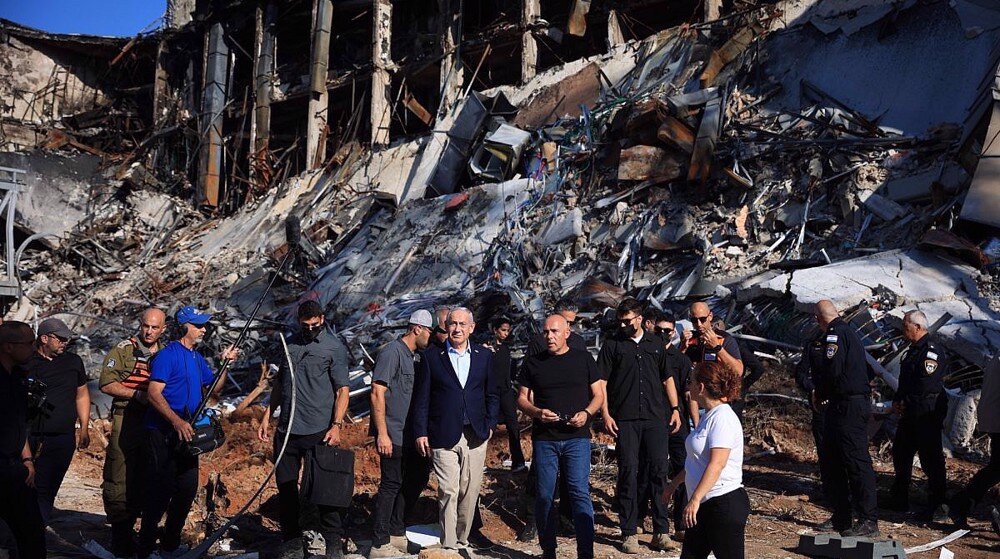
TEHRAN – Major General Ali Abdollahi, commander of Iran’s Khatam al-Anbiya Central Headquarters, said Israel suffered “very heavy blows” during the 12-day war with Iran but is concealing the true scale of its casualties and damage through strict censorship.
Abdollahi made the remarks during meetings with the families of the late Major General Amir Ali Hajizadeh, former commander of the Islamic Revolution Guard Corps (IRGC) Aerospace Force, and Brigadier General Ali Babakhani, the former head of the Office of the Commander-in-Chief at the Khatam al-Anbiya Central Headquarters.
Referring to Israel’s defeat in the conflict, Abdollahi said information obtained from the occupied territories indicates that Israeli forces sustained significant losses. “However, the regime is censoring the statistics related to the casualties and damage it has incurred,” he added.
According to Abdollahi, the scale of the damage compelled Israel to unilaterally seek a ceasefire. He said Iran agreed to halt the fighting with “high morale inspired by the culture of martyrdom.”
The conflict began on June 13, 2025, when Israel launched an unprovoked military attack on Iran, triggering a 12-day war that killed more than 1,000 people, including senior military commanders, nuclear scientists, and civilians. The United States later entered the conflict by striking three Iranian nuclear facilities, actions Tehran has described as grave violations of international law.
US media have reported that American forces fired more than 100 Terminal High Altitude Area Defense (THAAD) interceptors—and possibly as many as 150—to counter Iranian ballistic missiles during the conflict, consuming roughly a quarter of the United States’ stockpile of the advanced system. The US operates seven THAAD batteries, two of which were reportedly deployed in Israel during the war. Analysts said the heavy use of the interceptors exposed vulnerabilities in US missile defense capabilities and depleted a costly asset at a time of declining public support for Israel’s defense.
Meanwhile, the IRGC carried out a coordinated series of missile and drone attacks over 12 days in response to Israel’s actions and US-backed strikes on Iranian diplomatic and scientific institutions. Iranian officials say the operations unfolded in 22 distinct waves and targeted key Israeli military, intelligence, and technological facilities, ultimately forcing a halt to hostilities.
Iranian sources say the strikes hit several high-profile targets, including the Kirya military complex in Tel Aviv, often described as Israel’s “Pentagon,” Camp Moshe Dayan, Tel Nof, Nevatim, Hatzerim, and Ovda air bases—facilities associated with air operations, intelligence training, and command-and-control capabilities.
Iranian officials say Israel has since imposed sweeping censorship measures, restricting foreign media access, limiting satellite imagery, and pressuring social media platforms to suppress content showing damage and losses inside the occupied territories.
Tehran has repeatedly warned that it will deliver a decisive response to any future military aggression or actions that threaten Iran’s national security.
Leave a Comment