The limits of pragmatism: Persistent fragility in US-PGCC ties
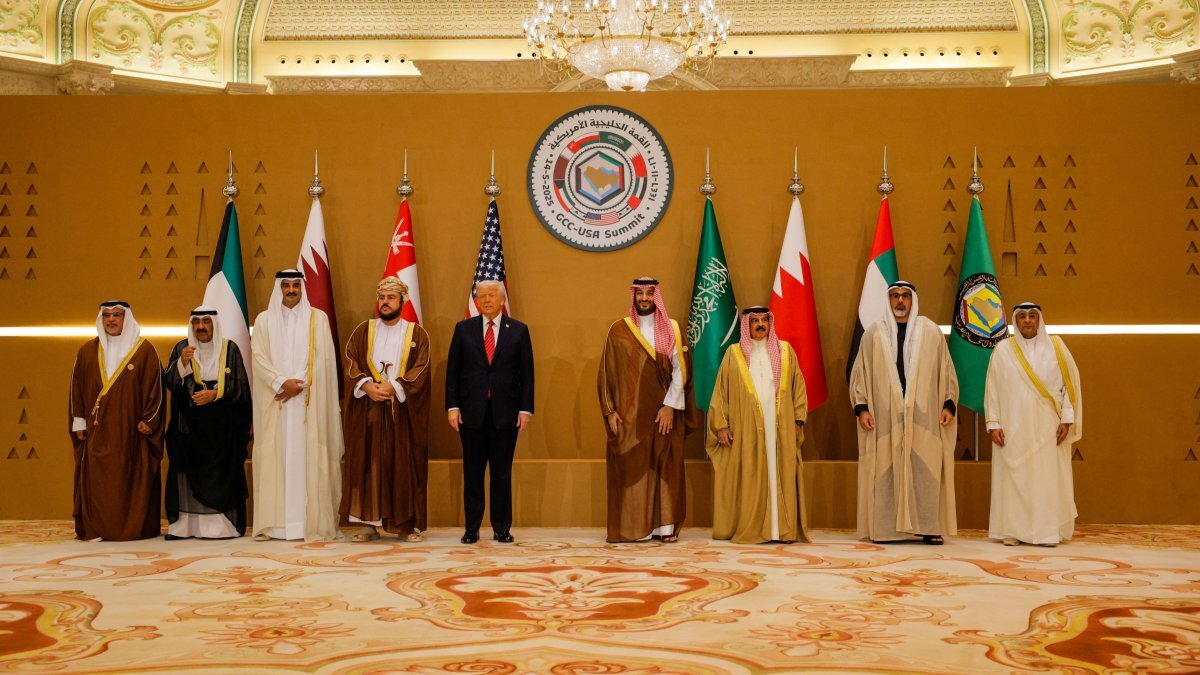
SHANGHAI - The year of 2025 saw a new rapprochement between the U.S. and PGCC countries. U.S. President Donald Trump visited Saudi Arabia, UAE and Qatar in May while Qatari Emir and Saudi Crown Prince visited the U.S. in the second half of the year. The reasons behind the latest warming-up could be numerous, but the most important should be that the two sides have simultaneously taken pragmatic approaches in their policies toward the other. And pragmatism will underline the relations between the two in the future.
The pragmatism is firstly manifested in the ways that both of the two sides have found to please the other side. Both the United States and PGCC countries have tangible expectations from each other. Trump himself, with his grandiose ambitions and America First strategy, regards extracting economic benefits from the Persian Gulf Arab states as a tangible goal. The Persian Gulf Arab states have numerous demands of the US, one of the most important being that the US continues to honor its security commitments. Although neither side can fully meet the other’s demands, they have found ways to appease each other.
During President Trump’s visit in May, Saudi Arabia pledged $600 billion in investments to the U.S., a figure that reportedly rose to $1 trillion during Crown Prince Mohammed bin Salman’s visit in mid-November. These commitments are striking given that Saudi Arabia’s annual GDP is approximately $1 trillion. Similarly, the UAE pledged $1.4 trillion in U.S. investments in May, while Qatar pledged $1.2 trillion, despite their respective annual GDPs being only $500 billion and $200 billion..
Although these three countries have some of the highest GDP per capita in the world, their overall national economic scale is not large, and they could not possibly afford the stated investment goals even with their full economic capacity. Furthermore, these three countries, heavily reliant on oil exports, will face increasingly severe fiscal difficulties with declining oil demand. Recently, Saudi Arabia explicitly announced the suspension of its future megacity project and abandoned its bid to host the 2029 Asian Winter Games, highlighting its current financial pressures.
The United States, likewise, cannot fully deliver on its security commitments to PGCC countries as well. In 2019, when Saudi oil facilities were attacked by the Houthis, Saudi Arabia hoped the US would “deliver justice,” but the Trump administration explicitly refused to honor its security commitment. On September 9, 2025, Israel attacked Hamas targets in Qatar while ironically with evident US acquiescence. Although the US verbally reinforced its security commitments to both Qatar and Saudi Arabia during the visits of the Qatari Emir and the Saudi Crown Prince, it is widely understood that these US security guarantees are largely empty promises, an illusion.
It has become less important whether the other can truly deliver on its promises, but what matters is that both sides need these superficial commitments to appease each other and provide capital for boasting domestically. In this sense, both sides have found a method of playing along to please the other.
The new pragmatism is also evident that both sides have abandoned political and moral principles in their relations. For the United States, this political morality was primarily the so-called values of liberal democracy, which was regarded as the core national interests of the U.S. For many years, the US saw itself as a beacon of liberal democracy and used this as a tool to expand its political influence.
The states on the southern shores of the Persian Gulf, for their part, once pursued pan-Arabism and pan-Islamism as key tenets of their foreign policy, with Saudi Arabia particularly emphasizing its national identity as the “Custodian of the Two Holy Mosques.” A key manifestation of these political values was their focus on upholding Palestinian national rights as an important foreign policy goal.
However, times have changed, and both the US and these states have, in practice, moved beyond these political moral constraints. Washington’s unconditional support for Israel on the Palestinian issue has resulted in a humanitarian disaster of rare scale in modern history for the Palestinians, and manifesting fully its hypocrisy on so-called liberalism. This is even more true for the businessman-turned-president Trump, who, in both his first and second terms, focused solely on interests rather than values. In the future, the US is more likely to abandon liberal values, driven by considerations of major power competition.
This tendency is even more manifested in its policy towards the Persian Gulf. The US no longer presses on human rights issues, no longer uses the Khashoggi incident to pressure Saudi Arabia, and has suspended its efforts pursuing Saudi Arabia’s accountability regarding the 9/11 attacks. This puts the Persian Gulf states at ease when dealing with the United States.
Saudi Arabia will continue to emphasize its national identity as “Custodian of the Two Holy Mosques” so as to position itself as a leader of the Islamic world, but the Persian Gulf states in general have actually abandoned pan-Arabism and pan-Islamism. The UAE and Bahrain both signed the Abraham Accords with Israel in 2020. Saudi Arabia has long engaged in clandestine cooperation with Israel, including in the security realm though it has not formally joined the Abraham Accords process. As these Arab states have abandoned their moral responsibility on the Palestinian issue, one of the major obstacles to developing relations with the United States will no longer exist though some diplomatic rhetorics will always be there.
It could be true that the new pragmatism on both sides could serve to maintain a kind of rapprochement of relations between the two for the time being. Trump’s abandonment of values of liberal democracy, which has proved to be very detrimental on regional order in the last decades, will particularly serve to ease its tensions with countries in the region, which should be regarded as positive if the U.S. can really accept it at home.
However, in general terms, the latest pragmatic turning will not change the fragile nature of U.S.-PGCC relations. The two sides have found the way to please each other, but this kind of mutual-pleasing efforts will only produce temporary enjoyments, and will never last long as they are fundamentally mutual-cheating tactics. While Americans will likely blame PGCC countries for not honoring their commitments, PGCC countries will find that they are being blackmailed without any real U.S. security commitments. PGCC countries are always the fragile one in front of the U.S., and the fragile one could always be the one that would be most seriously harmed.
PGCC countries’ abandonment of their commitments on the Palestine issue could even further undermine regional order as the Palestine problem is always at the core of regional agendas. Operation Tufan al-Aqsa (Operation Al-Aqsa Flood) in some way was a consequence of the frustration and desperation of Palestinians for the abandonment of their Arab and Muslim brothers. Further abandonment and absence of solution could foster more frustration, which could result in even more fierce reaction from Palestinians in the future.
Dr. Jin Liangxiang is Director of the Center for Middle East Studies, SIIS
Leave a Comment