Flow vs. territory: The real battle for the Strait of Hormuz
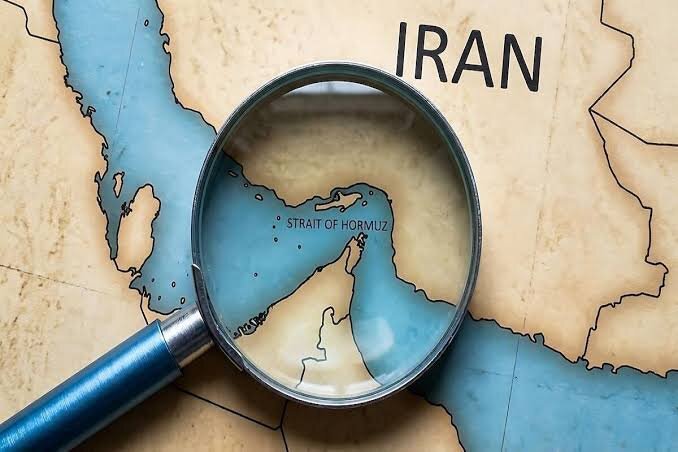
MADRID — The Trump administration and its media echo chamber are trying to convince the world that Iran has lost control over the Strait of Hormuz. At the same time, they claim large volumes of oil are crossing the strait.
The problem is that none of the global oil tracking services can confirm this. According to TankerTrackers, the leading authority on the subject, 3.8 million barrels per day passed through the strait last week, compared to 9.8 million barrels daily during the 25 days the memorandum of understanding was in force.
There is another issue that further undermines the American narrative: not every barrel exiting through the so-called "Omani route" represents a victory for Washington. Some Iranian sources suggest the situation is more complex: part of these flows may include Iranian crude mixed with exports from friendly neighbors such as Iraq, or traffic that Tehran permits in exchange for revenues and concessions that help it withstand the blockade.
Recent events show that the rivalry between Iran and the United States has moved beyond threats to close the maritime route and naval demonstrations, entering a more complex stage. As several Iranian experts note, the central question is no longer whether the strait is "open or closed," but who can manage the actual flow of ships, oil, and goods through this waterway.
In recent weeks, the U.S. objective in the southern part of the strait has gone beyond conventional naval escort operations. Washington is trying to establish a controlled maritime route under military cover to allow part of the energy flow to continue from the Persian Gulf to the Sea of Oman and from there to world markets.
But that is the objective. The reality is different: navigation data show that traffic remains well below normal levels. Despite all efforts, the United States has not managed to return the strait to its pre-war normality. Controlling it is beyond American reach, but this is precisely where one must pause to explain the difference between territorial control and flow control. In maritime power theory, choke points such as the Strait of Hormuz matter not only because of their geographic location, but because an actor can use them to influence the flow of goods, energy, and communications.
In this sense—and bearing in mind that territorial control is practically impossible—the United States is attempting to shift from territorial control to flow control by using the southern corridor. According to several reports, Washington has established a controlled mechanism for tanker transit near the coast of Oman, including scheduling ship movements, intelligence coordination, air and naval protection, and directing vessels along a route that, according to Washington, "presents a lower risk."
The fact that Iranian preventive and offensive actions have prevented this plan from being executed does not diminish its relevance. The United States is, in fact, trying to establish a new "operational order" in the strait whose ultimate goal is to deprive Iran of control over the flows through this strategic passage. Attacks against Iranian radar and surveillance systems were part of this plan from the moment Iran gained control of the strait.
One can therefore point to a shift in the model of U.S. military presence in the Persian Gulf. In the past, the American mission focused on deterrence: the presence of warships conveyed to Iran and other regional actors that any attempt to close the strait or massively attack commercial vessels could trigger a military response. Now, however, Washington has gone further and is attempting to directly manage the flow of navigation, trying to demonstrate that even if Iran disrupts part of the maritime traffic, the United States can establish an alternative operational route.
In other words, Washington seeks to reduce the strategic value of Hormuz's geography without being able, or willing, to seize total control of the strait itself—something it has not yet achieved. Moreover, the U.S. flow control plan has clear weaknesses: a military route cannot, by itself, substitute for political stability. If the war continues, shipping companies will face higher insurance, security, crew, and delay costs and, in many cases, cancellations.
Furthermore, there is the agreement between Iran and Oman for joint control of the strait. If implemented, the southern route would cease to make even the slightest sense, in political, military, and economic terms, for the United States.
In this sense, the southern corridor and the U.S. plan surrounding it constitute the most important strategic development at present for Iran, not because it has solved the problem, but because it has demonstrated that the struggle for Hormuz has entered a phase in which "flow control" is as important as "control of the maritime route."
But, as American political scientist John Mearsheimer points out: "We have no military cards left to play. It is the Iranians who hold the military card."
In other words, the balance of military coercion has tilted, almost decisively, in favor of Iran.
Leave a Comment