Venezuela and the panic of empire: The return of class war
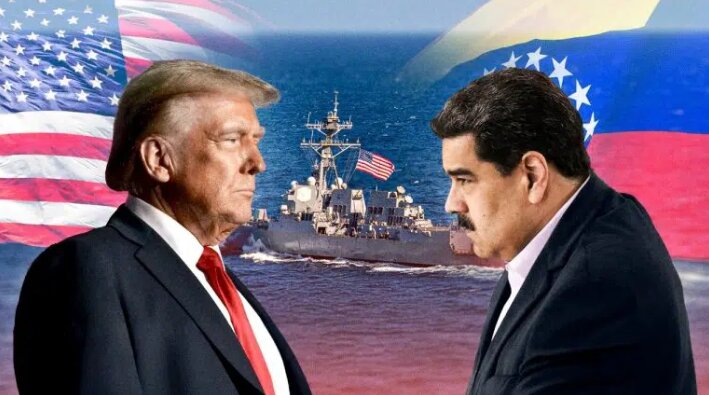
GOA - When Venezuela’s socialists declare their determination to resist U.S. aggression, they are not issuing a symbolic slogan. They are naming a structural conflict at the heart of the modern world: imperial capitalism versus popular sovereignty. What Donald Trump and the U.S. ruling class dismiss as an “easy target” is in fact a frontline society where the deepest contradictions of global capitalism are exposed — and therefore most feared.
Trump’s hostility toward Venezuela is neither episodic nor merely ideological in the narrow sense. It is a form of class war conducted at the level of states. Venezuela’s real transgression is not mismanagement or authoritarianism, as Washington endlessly repeats, but defiance — the refusal to fully subordinate its labour, resources, and political economy to U.S. capital. This is an unforgivable crime in an imperial order that equates obedience with legitimacy.
This explains why U.S. pressure persists even after years of demonstrable failure. Sanctions, sabotage, diplomatic isolation, and regime-change fantasies are not policy mistakes; they are instruments of imperial coercion. Their purpose is not reform but capitulation.
Imperialism as systemic necessity
A progressive analysis begins where liberal moralism ends. The United States does not target Venezuela because Trump is uniquely irrational, though he may be. It intervenes because capitalism in its imperial phase requires expansion, extraction, and domination. Monopoly capital seeks new outlets for surplus and profit, and any state that resists this logic becomes a threat.
Venezuela sits atop immense oil reserves and strategic minerals. An independent, redistributive political project in such a location is intolerable to a system built on accumulation by dispossession. Trump merely strips away the language of diplomacy. Where previous administrations cloaked intervention in the rhetoric of democracy and human rights, this one speaks more openly — exposing punishment, coercion, and domination as the true grammar of U.S. foreign policy.
Sanctions as weapons of class war
Economic sanctions are not neutral tools. They are weapons of class war. They do not primarily target governments; they target populations. They destroy purchasing power, erode public services, and fracture everyday life. Their logic is brutally simple: make life unbearable so that the poor will do what bombs could not.
From Cuba to Iran, Iraq to Venezuela, sanctions follow the same script. Democracy is invoked, but submission is the goal. Yet sanctions often backfire. Instead of producing compliant societies, they expose the violent core of liberal capitalism. They radicalise consciousness, deepen collective identity, and delegitimise elites aligned with foreign power. In Venezuela, survival itself becomes a political act.
Latin America and the end of fear
For much of the twentieth century, U.S. domination in Latin America relied on terror: coups, death squads, IMF shock therapy, and military rule. Local oligarchies served as junior partners of empire. That mechanism is now weakening.
Latin America carries a living memory of imperial violence — from Pinochet’s Chile to Argentina’s disappeared, from Guatemala’s genocide to Nicaragua’s dirty war. This historical consciousness matters. Trump’s threats no longer inspire automatic fear; they provoke recognition. Even governments that are not socialist understand the danger of legitimising intervention. Across the continent, unions, indigenous movements, civil society organisations, and left formations see Venezuela not as an isolated case, but as a test of whether sovereignty itself remains possible.
The re-politicisation of the working class
What distinguishes the Venezuelan case is the re-politicisation of society under siege. Imperial strategy assumes prolonged economic pain will atomise people, weaken solidarity, and turn anger inward. History repeatedly proves otherwise. When markets collapse, and external enemies are named, politics returns to first principles: Who controls resources? Who benefits from extraction? Who decides how wealth is distributed?
Sanctions strip away neoliberal illusions and force societies to confront class power directly. In Venezuela, this has meant renewed debates on communal ownership, food sovereignty, local production, and participatory governance.
These experiments are uneven and contested, but they matter because they reject the core imperial demand: depoliticization. Empire prefers technocrats, NGOs, and compliant elites. What it fears is politicized masses who understand that their suffering is not accidental, but engineered. In that sense, Venezuela’s endurance is not merely geopolitical resistance — it is a refusal to allow capitalism’s crisis to be misrepresented as national failure rather than systemic violence.
Trump and the crisis of imperial legitimacy
Trump is not a symbol of American strength. He is a symptom of imperial exhaustion. The U.S. ruling class confronts multiple crises: a hollowed-out industrial base, deep internal polarisation, declining ideological credibility, and eroding global dominance. Trump responds not with renewal, but with aggression — mistaking domination for leadership.
Imperial power without consent is brittle. The United States can still destroy, sanction, and destabilize. What it can no longer do is command belief. After Iraq, Afghanistan, Libya, and Gaza, its claims to moral authority ring hollow. Trump’s bluntness accelerates this collapse by saying aloud what the empire prefers to conceal.
Empire does not fall — it retreats
The U.S. has confronted defiant societies before — and lost. Vietnam shattered the myth of invincibility. Cuba survived the blockade through political will. Afghanistan ended in humiliating retreat. These were not tactical errors; they were structural limits.
Venezuela belongs to this lineage of resistance — not because it is flawless, but because it insists on the right to choose its own contradictions. Trump may threaten and posture, but structural reality is unforgiving. An empire facing coordinated resistance, declining legitimacy, and internal fracture does not secure decisive victories. It retreats unevenly, denies defeat, and seeks scapegoats.
Trump will not conquer Venezuela. The United States will not reclaim uncontested dominance in Latin America. What remains is struggle — uneven, incomplete, but no longer paralyzed by fear. And that, more than any sanction or speech, is what terrifies the empire the most.
Leave a Comment