Transit of goods via Iran reaches 13.5m tons in 8 months
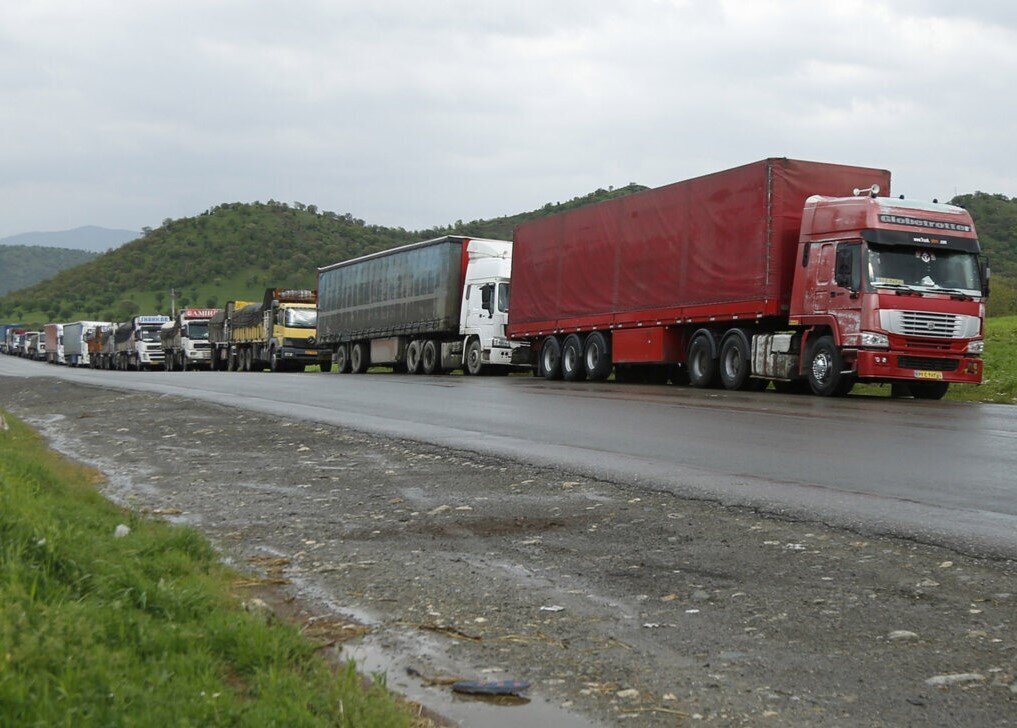
TEHRAN- As reported by the Islamic Republic of Iran Customs Administration (IRICA), 13.5 million tons of commodities was transited through Iran during the first eight months of the current Iranian calendar year (March 21-Novembre 21).
The IRICA report said that transit of good via the country fell 9.25 percent in the eight-month period of this year as compared to the same period of time in the previous year.
Iran plans to double its annual transit volume to 40 million tons by the end of its Seventh Development Plan in 2028, a senior Transport and Urban Development Ministry official said in late August, highlighting the country’s ambitions to become a regional transit hub.
Jafar Jamili, acting head of the ministry’s Office for Commercialization and Trade Associations, said nearly 20 million tons of cargo transited through Iran in the past year, with about 88 percent moved by road and 12 percent by rail.
Most of the traffic consisted of petroleum products shipped from Iraq’s Kurdistan region through southern Iranian ports to Persian Gulf Arab states. Other transit flows passed through Bandar Abbas toward Afghanistan and from northwestern to northeastern borders.
Under the new plan, 70 percent of transit is expected to move by road and 30 percent by rail. Jamili said meeting the 40-million-ton target requires expanded road and rail infrastructure, upgraded border terminals, and streamlined customs and trade processes.
He noted that geopolitical tensions in maritime chokepoints such as the Strait of Hormuz, Bab el-Mandeb and the Suez Canal have increased global interest in overland routes, particularly since the Russia-Ukraine war disrupted supply chains.
Jamili stressed the role of economic diplomacy, pointing to President Masoud Pezeshkian’s visits to Armenia and Belarus, both members of the Eurasian Economic Union, as part of efforts to strengthen regional connectivity.
Despite its strategic position on the Caspian Sea, Jamili said Iran has yet to capitalize on the region’s potential. “Only one percent of Russia’s 900 million tons of trade goes through the Caspian, showing that effective investment in this transit route has been lacking,” he said.
He added that sanctions on shipping, banking and insurance continue to divert some Indian and Russian exports away from Iran, even at the cost of longer routes and higher expenses.
Jamili said Iran is engaged in several regional corridors, including TRACECA, CPEC–ITI and KTAI, but boosting their competitiveness requires foreign investment, banking solutions and closer regional coordination.
In late November, Iran, China, Kazakhstan, Uzbekistan, Turkmenistan and Turkey signed a multilateral agreement in Istanbul aimed at expanding rail freight movement along the southern branch of the Eurasian transit corridor, reinforcing Iran’s position as a core gateway for container traffic between China and Europe.
The participating countries agreed to implement coordinated measures to streamline rail transit along the route.
The commitments include applying unified and competitive tariffs, shortening travel times for container trains, cutting auxiliary and customs-related costs, and upgrading rail infrastructure across the corridor.
The objective is to significantly raise the southern route’s share of international container transport between East Asia and Europe.
The agreement comes against the backdrop of substantial China–Europe rail trade, which last year approached 60 million tons carried by roughly 20,000 container trains.
Officials expect that full implementation of the Istanbul commitments will redirect a larger portion of this strategic volume through the Islamic Republic of Iran, generating meaningful economic and commercial gains.
MA
Leave a Comment