
Neonatal health workshops held in Sistan-Baluchestan province
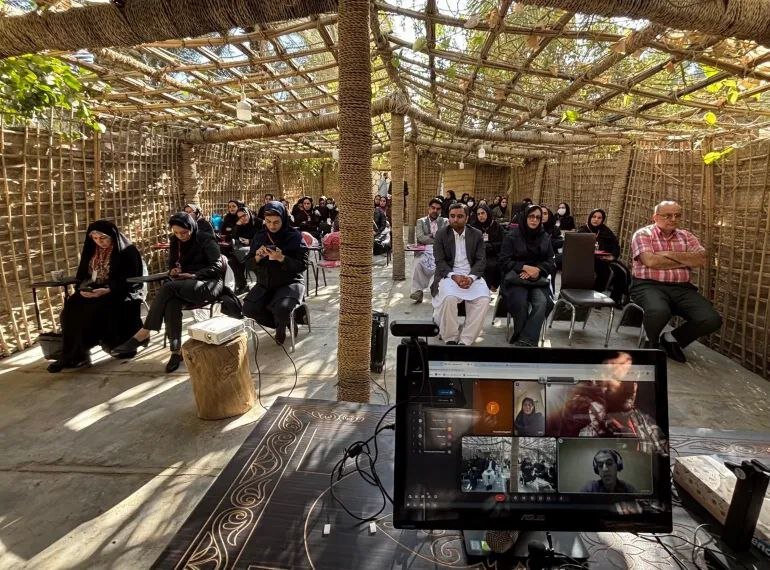
TEHRAN – The United Nations Children’s Fund (UNICEF) has held two intensive neonatal health workshops in Saravan, Sistan-Baluchestan province.
Held from December 1 to 4, the four-day workshops were organized in collaboration with the Ministry of Health and Medical Education, Zahedan University of Medical Sciences, and the Research Center for Children and Adolescents' Health to combat high rates of neonatal mortality.
These sessions are central to UNICEF’s strategy to strengthen essential newborn care where it is needed most, the UNICEF website announced in a press release on December 17.
Focus on “Golden Hours”
Saravan was prioritized for this capacity building because of its neonatal mortality rate (NMR) exceeding the national average, coupled with challenges like high staff turnover and a need for refreshed clinical skills. The training focused on the “Golden Hours”—the critical moments following birth when timely and skilled interventions drastically reduce preventable deaths and complications, ensuring the best possible start for every infant.
Practical skills for 70 frontline providers
The workshops provided hands-on, practical training to a total of 70 healthcare providers, including 40 midwives and 30 nurses from maternity and neonatal wards. Led by expert neonatologists, the curriculum covered crucial, life-saving techniques, including: Neonatal resuscitation, Stabilization of critically ill newborns, Management of premature infants, Early complication detection and assessment, and Breastfeeding support. Through simulation-based exercises, participants enhanced their confidence and preparedness for real clinical scenarios.
Scaling up commitment
Participant feedback confirmed the high value and relevance of the training in strengthening daily clinical practice. UNICEF Iran remains dedicated to supporting the health ministry in expanding essential newborn care. Following the success in Saravan, UNICEF will support two more workshops in Zahedan on 14–15 and 16–17 December 2025, continuing to enhance the skills of healthcare providers and secure better health outcomes for the youngest members of the community.
Services in Sistan-Baluchestan
Funded by the Republic of Korea, the UNICEF, in cooperation with the Government of Iran, constructed a Sewage Treatment Plant (STP) in Kohak, Sistan-Baluchestan province, to foster resilience in the region.
The Water, Sanitation, and Hygiene (WASH) project was finished in under a year and was officially inaugurated on November 18-19.
The Kohak project helps keep the local environment safe and clean, lessens the impacts of water scarcity, and supports the health and livelihood of local families, including Afghan refugees and host communities, the UNICEF website announced in a press release on December 17.
The new facility treats 1,000 cubic meters of wastewater every day, serving about 10,000 people. Importantly, it stops untreated sewage from polluting the Chahnimes reservoir, which is a key source of safe water for the area.
In October, UNICEF organized workshops targeting counselors from Primary Health Care (PHC) centers and schools across 14 cities in the southern and eight in the northern parts of Sistan-Baluchestan province.
So far, two workshops have been held in the province. The first training workshop took place in Chabahar from October 6 to 9, 2025, and the second was held in Zahedan from October 19 to 22.
Their goal was to help local Primary Health Care and School counselors guide and support parents of adolescents in adopting positive parenting approaches.
MT/MG