
Golestan at a glance: forests, ancient monuments and Caspian landscapes
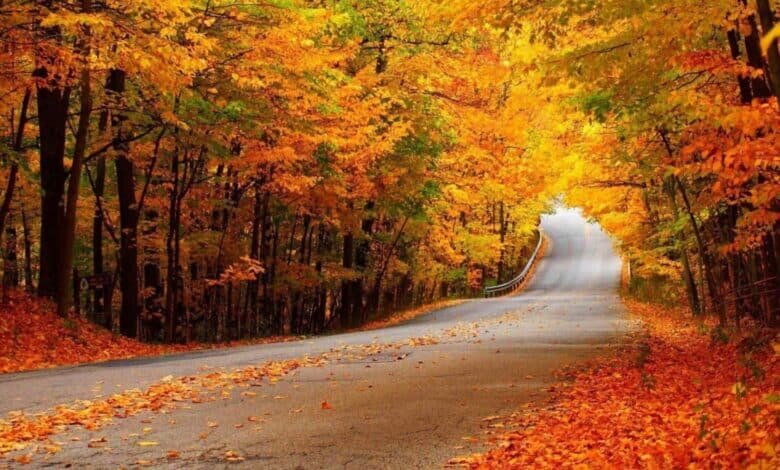
GORGAN - Golestan is one of the least visited provinces in Iran, yet for many travelers who take the time to explore it, the region may quickly become a favorite destination.
After several days wandering through Golestan, it is easy to see why the province deserves far more attention. With its green landscapes, deep cultural roots, and major historical sites, Golestan stands out as a hidden gem well worth discovering.
Golestan is home to sections of the ancient Hyrcanian forests, which are registered by UNESCO. Stretching along the southern coast of the Caspian Sea, these forests are among the most significant natural heritage sites in the region and offer excellent opportunities for hiking and nature tourism.
One of Golestan’s most remarkable historical features is the Great Wall of Gorgan, also known as the Red Wall. Built during the Sassanian era to protect the empire’s northern frontiers, the wall is notable not only for its length but also for its advanced engineering. Canals and water systems were used in brick production, and remains such as the Sadd-e Garkaz dam can still be seen today.
The province borders Semnan, Mazandaran, and North Khorasan, and it also shares an international border with Turkmenistan. Parts of the eastern Alborz Mountains run through Golestan, with elevations decreasing toward the east. The climate is generally moderate and semi-humid, while northern areas closer to Turkmenistan are warmer and drier. Springs are cool and pleasant, summers are warm, and winters can be cold with rain or snow. Although Golestan can be visited year-round, spring and autumn are often the best seasons to travel.
Why visit Golestan?
From epic train journeys to some of the greenest scenery in the country, Golestan is an underrated province that offers far more than most travelers expect. Its wide-ranging landscape features exceptional green canyons, velvet-smooth rolling hills, and dramatic viewpoints and equestrian clubs. Sites such as Khalid Nabi, the tomb of a pre-Islamic prophet set in a striking location.
Golestan’s appeal goes beyond nature and archaeology. The province has a strong Central Asian cultural identity that, in many ways, feels closer to Kazakhstan than to central Iran. This blend of landscapes and culture makes Golestan an unmissable destination that can easily keep visitors engaged for several days.
Culture and people

From a cultural perspective, Golestan is one of Iran’s most distinctive regions. Because it borders Turkmenistan, the province is home to a large Turkmen population. Turkmen is widely spoken, and traditional Turkmen women often wear colorful dresses rather than the black chador common elsewhere in the country. This cultural difference is visible in daily life, markets, food, and ceremonies.
The history of Golestan dates back to the Parthian period. Over the centuries, the region was known by several names, including Verganah, Gorgan, and Astarabad. In 1937, the name Gorgan was officially adopted, and today Gorgan serves as the provincial capital. Many of Golestan’s cities grew gradually from villages into urban centers.
Gorgan, The provincial capital
Gorgan, located near the southeastern corner of the Caspian Sea, serves as the main gateway to the province. While it is not considered one of Iran’s most exciting cities, it has a lively bazaar, several blue-tiled mosques worth visiting, and a number of historical buildings, including the centuries-old Jameh Mosque of Gorgan, Emadiyeh School, and traditional houses.
Gorgan also makes an excellent base for exploring nearby Turkmen towns and natural attractions. Close to the city is Ziarat Valley, a popular local getaway featuring forests, waterfalls, and half-day trekking routes. Other nearby natural sites include Naharkhoran Forest Park, Alangdarreh Forest Park, Tuskastan Forest, and Ziarat Village and Waterfall.
Aghghala, a Turkmen experience
Aghghala is often considered the most Turkmen town in Golestan province. It is an ideal place to spend a few hours wandering through restaurants that serve Central Asian–inspired food and observing everyday life. If possible, visit on a Thursday, when the local market takes place. On market day, locals sell traditional Turkmen fabrics, foods, and handmade goods, offering an authentic cultural experience.
Gonbad-e Kavus

Gonbad-e Kavus is the second-largest city in Golestan and has a significant Turkmen population. It is one of the province’s most important destinations and a pleasant place to spend one or two days. The city’s main landmark is the Gonbad-e Qabus Tower, a UNESCO World Heritage site.
Completed in 1006 CE, the brick tower is considered an outstanding example of early Islamic architecture. The interior contains some of the earliest examples of muqarnas, the geometric architectural forms commonly seen in Iranian mosques. The tower reflects cultural exchanges between Central Asian nomads and Iranian civilization. Nearby attractions include the Khalid Nabi cemetery, Hazar Darreh, and several wetlands that are ideal for bird watching and nature tourism.
Bandar Turkmen and the Caspian coast

Another key destination in Golestan is Bandar Turkmen, a coastal city on the eastern shore of the Caspian Sea. Established in 1927, it is known for its Turkmen culture, traditional port area, and relaxed seaside atmosphere. A seaside bazaar and the old port are popular spots for visitors.
From Bandar Turkmen, travelers can take a short boat ride, about 10 minutes, to Ashuradeh Island, a small island in the Caspian Sea and one of the area’s main attractions. Nearby villages such as Qareh Qashli are famous for Turkmen horses and horse racing, an important part of local tradition.
Food, handicrafts, and traditions

Golestan offers a rich variety of traditional dishes. Hali Ash (also known as Ash-Alu) is made with legumes, rice, herbs, and green tomatoes. Other local foods include Mash Polo, Ghojeh Ash, and Boulama, which is often prepared for special family occasions. Chekdermeh, a popular Turkmen dish in Bandar Turkmen, is typically served with yogurt and fresh greens.
Local sweets such as Umaaj Halva, Sar-Gharbili, and the nationally registered Paderazi bread are popular souvenirs. The province is also well known for its handicrafts, including silk weaving, kilim and jajim weaving, pelas carpets, felting, needlework, and leatherwork. These crafts reflect Golestan’s ethnic diversity and long-standing traditions.
One of the most notable Turkmen customs in Golestan is the “Agh-Ash” ceremony. When a Turkmen man reaches the age of 63, family and friends gather to celebrate with food, poetry, and traditional music. This ceremony is registered as part of Iran’s national spiritual heritage and highlights the strong cultural identity of the region.
Golestan was formerly part of Mazandaran province and became an independent province in 1997.
Getting to Golestan by bus or train

Traveling by bus is one of the easiest and fastest ways to get around Iran. Gorgan and Gonbad-e Kavus are the main cities in Golestan, with daily direct bus connections from major cities such as Tehran, Isfahan, and Mashhad.
If you are traveling from Tehran, the train journey to Golestan is considered one of the most scenic in the country. The route passes through dramatic landscapes and crosses several historic bridges, making the journey itself a memorable part of the trip.
AM