Export from Golestan province rises 14% in 8 months on year
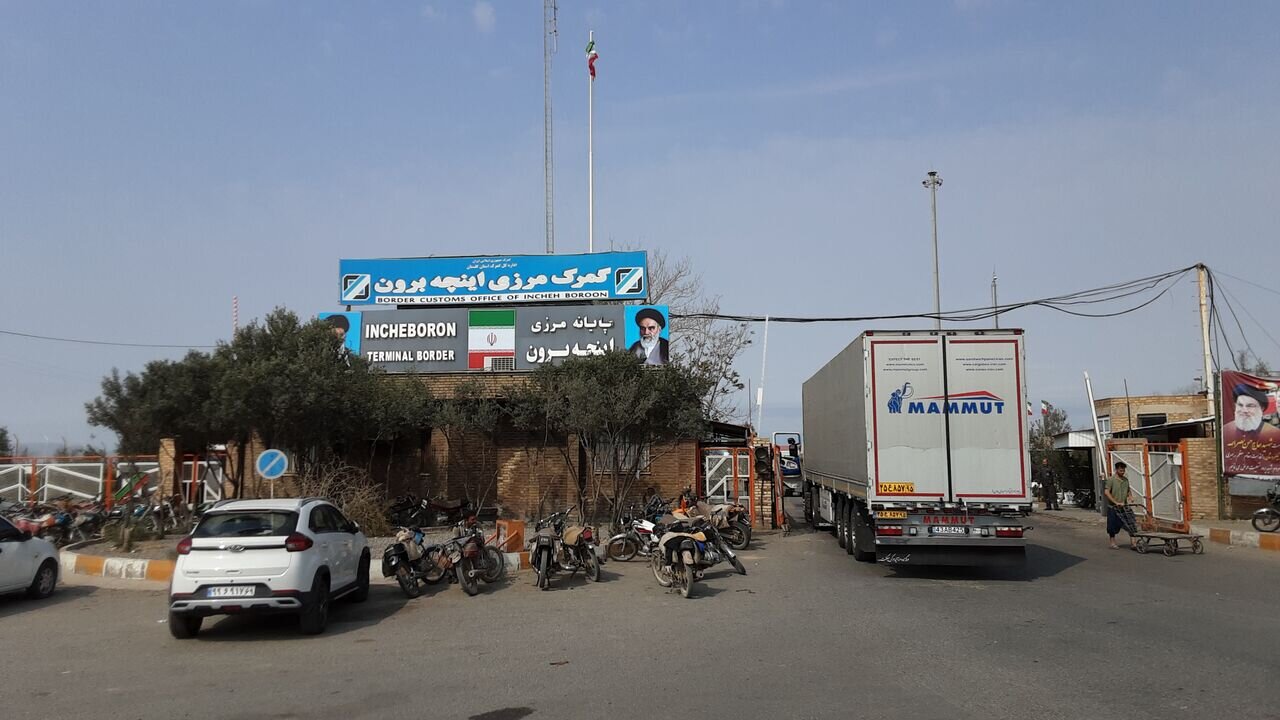
TEHRAN- The director-general of Golestan province’s Industry, Mining and Trade Department said that the value of export from the province increased by 14 percent during the first eight months of the current Iranian calendar year (March 21-November 21), as compared to the same period of time in the previous year.
Darvish-Ali Hassanzadeh announced that 600,000 tons of non-oil commodities worth $330 million were exported from the province in the eight-month period, indicating also 32 percent growth in weight, year on year.
He stated that the main export items of the province include pistachios, iron pipes, polyethylene compound, cheese, aquatic feed, and rebar, adding that the exports were destined for 27 countries, with Turkmenistan, Kazakhstan, Uzbekistan, and Iraq being the most important.
The official also referred to import statistics, saying that during the same period, 35,200 tons of goods worth $67.3 million were imported into the country through the province's customs, which included crude soybean oil, fabric, greenhouse equipment, fertilizer, and industrial parts.
Golestan Province, situated in northeastern Iran along the southern coast of the Caspian Sea, is a region of significant agricultural wealth and growing strategic importance in trade and transit. Its economy, trade dynamics, and geographic position create a unique profile within Iran's national framework.
The cornerstone of Golestan's economy is its robust and diverse agricultural sector. The province benefits from fertile plains, a humid subtropical climate in the north, and ample water resources, making it one of Iran's most vital food baskets. It is the country's leading producer of oilseeds, a major contributor of wheat, and a key region for fruits like oranges, kiwis, and cotton. Livestock, poultry, and fisheries (especially from the Caspian Sea) further strengthen the agro-sector.
This agricultural dominance shapes the province's industrial landscape, which is heavily oriented towards agro-processing. Numerous factories are engaged in cotton ginning, edible oil extraction, flour milling, meat processing, and dairy production.
Golestan's trade flows are a direct reflection of its economic output. The province is a net exporter of agricultural and processed food products to other Iranian provinces and international markets. Key exports include vegetable oils, cereals, meat products, citrus fruits, and textiles. Imports are generally limited to machinery, fertilizers, and consumer goods not produced locally. The province engages in cross-border trade with Turkmenistan via the Incheh Borun border crossing, which facilitates the exchange of goods, though its volume is modest compared to Iran's western borders.
Golestan's most transformative potential lies in its geostrategic location for international transit. The province is a critical node in the International North-South Transport Corridor (INSTC), the multi-modal route connecting India, Iran, Russia, and Europe. The key infrastructure unlocking this potential is the Gorgan Railroad, which extends northeast to the border. This rail link allows cargo from Indian Ocean ports like Chabahar to travel across Iran, through Golestan, into Turkmenistan and Central Asia, and onward to Russia and beyond. The Gorgan-Mashhad railway also enhances north-south connectivity within Iran.
Furthermore, the province is integral to the "East-West" transit corridor along the Caspian Sea littoral, linking Central Asia to the Caucasus and Turkey. The port of Gorgan, although small, serves as a Caspian Sea gateway for regional trade. The development of the Gorgan-Bojnurd railway will further solidify this east-west link. These corridors position Golestan not just as an agricultural producer, but as a vital transit bridge, offering Iran significant opportunities to earn revenue from cargo movement and logistics services.
As the capital and administrative heart of Golestan Province, Gorgan functions as the central commercial, service, and distribution hub for the entire region. Its economy is intrinsically linked to the province's agricultural wealth. The city hosts numerous food processing plants, textile factories (especially cotton), and edible oil refineries, processing raw materials from the surrounding farms. Gorgan's wholesale markets are critical nodes for distributing agricultural products like citrus, soybeans, and wheat to national markets.
The city is a major center for trade and services, including banking, education, and healthcare. Its strategic location on the main north-south highway connecting Tehran to Mashhad and the border with Turkmenistan reinforces its role as a key logistic and transit point. While not a major industrial city by national standards, Gorgan's economic strength lies in its agro-industrial sector and its central role in coordinating the trade and commerce of one of Iran's most fertile provinces.
MA
Leave a Comment