‘What is happening in Gaza is not collateral damage, it is policy’
Azra Sayeed says the pattern of attacks proves intent, not accident
TEHRAN — In a revealing and timely conversation, Azra Talat Sayeed, Secretary-General of the International League of Peoples’ Struggle (ILPS) and one of the lead conveners of the International People’s Tribunal on Palestine (IPT), discusses the tribunal held on November 23–24, 2025, in Barcelona, Spain.
The two-day tribunal convened activists, legal experts and witnesses to examine war crimes, ecocide, forced starvation and systematic violations of international law in Gaza and occupied Palestine, producing a historic verdict aimed at holding perpetrators accountable.
In an exclusive interview with the Tehran Times, Sayeed outlines her personal role in coordinating the tribunal, explains the legal basis of the “Right to Resist,” and situates Gaza’s plight within a broader global struggle against imperialism. Her testimony reflects ILPS’s commitment to mobilizing public opinion and leveraging legal mechanisms to challenge oppression worldwide.
The following is the text of the interview:
As Secretary General of ILPS and one of the conveners of the IPT, what specific roles and responsibilities did you personally carry out during the tribunal process?
In June 2024, at the 7th International Assembly of ILPS, a resolution was passed for a tribunal to be held in solidarity with Palestine. I was elected General Secretary at the 7IA (7th International Assembly) , and one of my main responsibilities was to coordinate the overall schedule and ensure that deadlines were met.
This included selecting jurors and prosecutors, bringing together all delegates, gathering witnesses, and ensuring confidentiality and security for everyone involved.
Together with the external vice president of ILPS, I was also responsible for planning, programming, and fundraising. Although the legal team handled the jurors and prosecutors, we were involved in every step to ensure the credibility of the tribunal and the safety of all witnesses.
Even if Gaza’s infrastructure is destroyed and the land is severely damaged, resistance has not ended.
The “Right to Resist” was a central legal principle in the IPT. Could you define this right within international law and explain why it was fundamental to the tribunal?
The “Right to Resist” is recognized in international law and under ICCPR, the right to freedom is stated clearly. We were very clear that the struggle for rights is legitimate and that this is a right recognized under international law.
Since ILPS is an anti-imperialist and anti-fascist organization, the concept of the “right to struggle” is at the heart of our movement. The “Right to Resist” is grounded in international law, and the UN resolution 1514 (XV) of 14 December 1960 explicitly points out the right of self-determination. So, ILPS had no difficulty basing the tribunal on this principle. The main issue is not the law itself but the refusal of many governments to recognize it.
Although the IPT is a people-driven tribunal, how do you ensure that the findings adhere to credible legal standards and avoid political bias?
The jury was composed of highly recognized legal personalities — most of them associated with Bar Associations or international legal bodies. They were selected for their professional expertise and their ability to apply a legal framework similar to that of formal courts.
One of our biggest challenges was ensuring their independence. We were careful in not choosing people with a strong political leaning to the Palestinian cause so that the tribunal would have an independent unbiased position. Our emphasis was to select jurors with a clear understanding of people’s rights and ongoing global issues, who would work with facts and scientific evidence.
For the witnesses, many were from Gaza, but we also included independent experts with no political affiliations. The testimonies came directly from people with first-hand experience — including individuals who lived in Gaza during the tribunal period. Their evidence was combined with credible sources such as UN reports and academic studies.
The prosecutors were internationally represented. They were from the West Asia and North Africa (WANA) region, USA and Europe. Prosecutors examined the testimonies and questioned the witnesses and expert witnesses. So, in terms of legal standards, the tribunal followed an approach comparable to internationally recognized courts.
People continue to resist throughout occupied Palestine.
You emphasize the link between Palestine and broader global patterns of imperialism. How does Gaza fit into a wider structure of Western militarism and neocolonial control?
What is happening in Gaza is part of a larger colonial project. For example, the India-Middle East-Europe Economic Corridor announced in India on the 19th and 20th of September — just a few days before the “Al-Aqsa Floods” on October 7 — included a trade route connecting to a port in Israel, which was intended to pass through Gaza.
This is part of an overall neocolonial strategy involving resources, oil, gas, and regional influence. Similarly, the Abraham Accords — which began in 2020 with the UAE, Bahrain, Morocco, Sudan, and recently Kazakhstan — reflect a global push for normalization that supports imperial interests.
For US imperialism, control over the occupied Palestinian territories is central to its control over the oil in the Persian Gulf countries, the WANA region. We can see the extension of US imperialism towards Venezuela, the most oil rich country in the world.
During the tribunal, you described intentional destruction of agriculture, water systems, and the environment. Could you elaborate on how these actions constitute a deliberate ecological and humanitarian assault?
The agriculture in Gaza was already weakened during earlier attacks. Since the siege of 2007, the sector has been severely impacted. Even before October 7, agricultural production was highly controlled by the Zionist entity.
Right after the beginning of the genocide in Gaza, there was deliberate targeting of fishing boats in Gaza — 99 boats were bombed. Water systems, agricultural tools, and farming infrastructure were devastated. This was reported by different witnesses and expert witnesses, and is also well documented by international agencies.
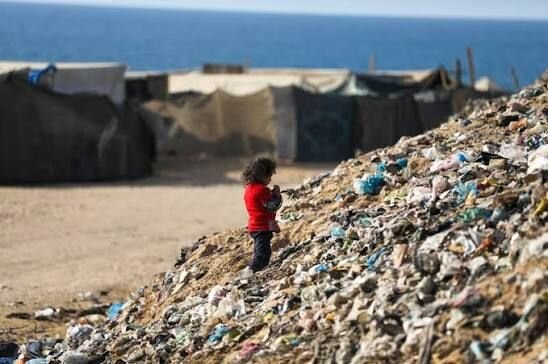
After the massive bombing campaign, the environmental destruction worsened. Trees were uprooted, the land was damaged, and access to essential resources was completely blocked. An expert witness compared satellite images from before and after October 7, the devastation, the almost complete erosion of green areas was shocking. The land had turned black — almost dead — as if nothing could survive.
During the tribunal, the lead prosecutor summarized the findings from the testimonies clearly: First agriculture was destroyed and food crops, vegetables could no longer be cultivated, the water system collapsed, fishing boats were destroyed, and essential infrastructure — including bakeries, hospitals, doctors, pharmacists, and women’s reproductive health services — was targeted. Everything that could sustain life was systematically destroyed.
This is not collateral damage — it is a deliberate strategy. There is no other explanation. The term metacide was used during the tribunal to describe the complete destruction of life, which includes of course not only human beings but environment, biodiversity.
As the day proceeded on the first day of the tribunal, and by the end of the second day, the picture of devastation, the suffering of the people, the evidence for genocide, for ecocide, for forced starvation was starkly clear.
But I would like to emphasize, that even if Gaza’s infrastructure is destroyed and the land is severely damaged, resistance has not ended. People continue to resist — not only in Gaza, but also in the West Bank, and throughout occupied Palestine. Individuals, communities, countries around the world continue to stand in solidarity.
Gaza’s destruction is part of a global pattern of imperial violence.
Do you believe public opinion in Western countries, especially in the U.S. and Europe, is genuinely shifting? And what role has the tribunal played in that shift?
Yes, there has been a significant shift among the people. Over the last two years, political education has helped communities understand the history of Palestine — from the 1917 Balfour Declaration, the Nakba, and the occupation, to the ongoing genocidal actions.
People also saw where weapons were coming from — the US, UK, France, the Netherlands, Italy — all supplying arms to Israel. The hypocrisy of Western democracies became clear; its hegemonic, colonial and neo-colonial intentions are now very clear.
The ongoing resistance in the US, in the UK, and across Europe is clear. We have political prisoners in these countries now because they are standing up against their governments, demanding an end to the war, and end to the occupation.
What impressed me most was the role of the masses. In many countries, workers began blocking weapons shipments. Youth movements grew. In Pakistan, where I come from, the public learned about Palestinian history from older generations who carried the memory of the 1948 Nakba.
So yes — there is a shift among the working class, among communities of color, among youth, and among those already educated about imperialism. In Spain, for example, millions of people strongly support the liberation of Palestine. There have been millions of people on the streets in the Netherlands, France and other European countries. Aotearoa (New Zealand) has strong support for Palestinian Resistance as the M?oris are also suffering from settler colonialism.
The tribunal plays two major roles:
1. Legal tool: presenting evidence before human rights bodies and international organizations.
2. Political tool: educating and mobilizing people through organizations like ILPS and the People’s Coalition for Food Sovereignty (PCFS).
This tribunal also united many organizations that had previously worked separately. There is no doubt that the tribunal will allow for further unity and coordination for building a greater mass movement for global solidarity against the Palestinian occupation by the US-led Zionist entity.
What is happening in Gaza is not collateral damage — it is a deliberate strategy.
Why was Spain chosen as the host country for the tribunal?
We wanted to hold the tribunal in Europe, close to the people whose governments support the genocide. Spain — particularly Barcelona — is historically and politically supportive of Palestine.
It was essential to host the tribunal in a place where people could gather freely. Holding it in the U.S. or in some European countries would have been difficult. Barcelona also was the city from where the Global Sumud Flotilla was launched and gave testimony to the strong Palestinian support.
As a female leader in political organizing, how do you perceive the role of Palestinian women in the resistance?
Women like Leila Khaled have always been icons for us. She attended the 7th International Assembly of ILPS. I remember talking to her about how difficult everything is, trying not to cry. She told me: “No, you cannot cry, Azra. You have to fight.”
That moment inspired me. Palestinian women play a vital role in every aspect of resistance — political, humanitarian, medical, environmental, and social. Many have sacrificed their lives.
Figures like Khalida Jarrar, who spent many years in prison, dedicated their efforts to political education and activism inside prison, even as they suffered the intense torture that is the hallmark of the Zionist entity.
We also know civilian women like Razan Zuayter, head of the Arab Group for the Protection of Nature, who has worked through international organizations to raise awareness on the destruction of food and agriculture production in occupied Palestinian territories, and has been advocating for food sovereignty.
These women have suffered displacement and migration numerous times but have stood steadfast in defending their “Right to Return” to their homeland. Indeed, they are all beacons for all fighting for national liberation, against the tyranny and dictatorship in our home countries.
In the resistance, whether through armed struggle or through civil, social, and political work, Palestinian women play an essential role. Their courage is deeply inspiring.
Leave a Comment