
Strategic significance of Bin Zayed’s visit to Pakistan
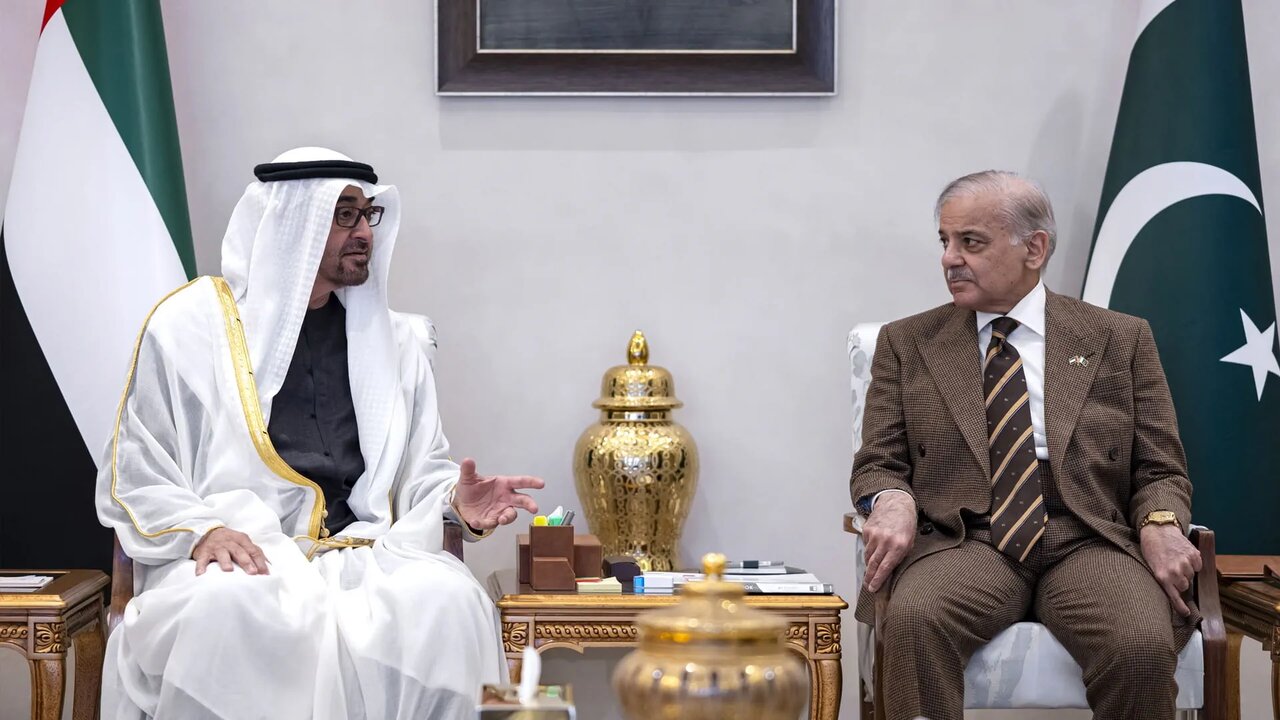
TEHRAN - The official visit of Sheikh Mohamed bin Zayed to the Islamic Republic of Pakistan on December 26, 2025, may at first glance be interpreted as a ceremonial bilateral engagement between two countries bound by longstanding and “brotherly” relations.
A closer examination of the timing, diplomatic symbolism, substance of discussions, and the broader regional and extra-regional context, however, reveals that this visit should be understood as a multilayered strategic act—one that simultaneously encompasses economic, security, geopolitical, and symbolic dimensions, and is embedded in the broader recalibration of the UAE’s role within a region undergoing structural transformation.
This marks Sheikh Mohamed bin Zayed’s first visit to Pakistan in his capacity as President of the United Arab Emirates, a fact that alone amplifies the visit’s symbolic and political significance. By selecting Pakistan as a key destination in its high-level diplomatic outreach, Abu Dhabi has clearly signaled that it views Islamabad not merely as a traditional partner, but as a critical strategic node linking the Persian Gulf region with South Asia.
The nature of the official reception accorded to the UAE president in Islamabad—from the escort of JF-17 fighter jets in Pakistani airspace and the firing of a 21-gun salute, to the simultaneous presence of the prime minister, foreign minister, and army chief, as well as the declaration of a local holiday in the capital—conveys messages that go well beyond standard diplomatic protocol. In the lexicon of international relations, such heightened ceremonial symbolism is typically employed when a host country seeks either to underscore a strategic commitment to a particular relationship or to send indirect signals to third-party actors. In this case, both objectives are clearly discernible. Confronted with persistent economic pressures, structural financial challenges, and intensifying competition among regional and extra-regional actors for influence, Pakistan appears intent on highlighting the UAE as a privileged, reliable, and differentiated partner.
The timing of the visit is equally consequential. Over the past several years, the UAE has progressively shifted its foreign policy away from costly and high-risk interventionism—most notably in Yemen and Libya—toward a model centered on economic diplomacy, risk management, and the consolidation of influence through investment and geopolitical networking. This shift does not imply a wholesale abandonment of hard power instruments; rather, it reflects a calculated blending of hard and soft power within the UAE’s overarching strategic doctrine.
Within this framework, Pakistan has assumed heightened importance for Abu Dhabi. Beyond its demographic and geopolitical weight, Pakistan functions as a connective hub linking the Persian Gulf to South Asia, China, and emerging economic corridors. Moreover, Pakistan’s military remains one of the most cohesive and influential armed forces in the Muslim world, a reality that occupies a central place in Emirati security calculations.
The economic dimension unquestionably constitutes the core pillar of this visit. The repeated emphasis by officials from both sides on trade, investment, energy, infrastructure, and information technology suggests that Pakistan–UAE relations are moving beyond the traditional paradigm of short-term financial assistance or emergency deposits, toward a model of targeted, long-term investment. This is the same approach the UAE has pursued in recent years in countries such as Egypt, Jordan, and even Turkey, seeking to generate both economic returns and durable political leverage.
For Pakistan, the significance of this model is particularly pronounced. As of 2025, Pakistan continues to grapple with high external debt, persistent balance-of-payments deficits, and an urgent need for foreign direct investment. The UAE, unlike many other potential partners, possesses centralized decision-making capacity, substantial financial resources, and institutional flexibility—attributes that render it an especially attractive and vital partner for a country in Pakistan’s position.
At the same time, the security layer of the visit should not be overlooked. Although less explicit in official statements, it is clearly present in the background. The shared emphasis on “regional stability” and the prominent role of Pakistan’s army chief during the welcoming ceremonies suggest that security-related discussions—albeit largely behind closed doors—formed part of the agenda. Abu Dhabi is acutely aware that instability in Pakistan would carry direct and indirect repercussions for Persian Gulf security, and engagement with Pakistan’s key security institutions thus represents a strategic investment.
At this juncture, developments in Africa and their impact on regional perceptions of the UAE assume particular relevance. In recent years, the UAE’s role in the Sudanese crisis—especially allegations regarding political and logistical support for the Rapid Support Forces (RSF) vis-à-vis the Sudanese Armed Forces—has drawn significant regional and international scrutiny. Beyond Sudan, the UAE’s active footprint in the Horn of Africa, including Somalia, Somaliland (notably the port of Berbera), and Eritrea, has reinforced an image of the UAE as an assertive, and at times interventionist, security–military actor.
This record has prompted many regional states, including those in South Asia, to view engagement with the UAE not merely through the lens of benign economic partnership, but as a relationship requiring careful assessment of latent objectives, security considerations, and broader geopolitical consequences.
From this perspective, Sheikh Mohamed bin Zayed’s visit to Pakistan can be interpreted as an effort to rebalance the UAE’s image—foregrounding its economic diplomacy and stability-oriented posture without entirely relinquishing the instruments of hard power. At the same time, the less visible dimension of the visit—particularly in light of the Pakistan–Saudi security agreement and recent Saudi strikes against Emirati-aligned forces in Yemen—adds an additional layer of strategic significance for regional actors such as Iran, Saudi Arabia, and China.
At a broader level, the visit must be situated within the context of a subtle yet tangible competition among leading powers in the Muslim world—most notably Saudi Arabia, the United Arab Emirates, and Turkey. Owing to its military capacity, demographic weight, and symbolic stature, Pakistan represents a geopolitical prize within this competition. Through proactive economic diplomacy and a robust presence in infrastructure and energy projects, the UAE appears intent on balancing Saudi Arabia’s traditional influence while simultaneously constraining the expansion of Turkish leverage in Pakistan.
Ultimately, the UAE president’s visit to Pakistan should be viewed not as an isolated diplomatic episode, but as part of a larger strategic roadmap—one in which Abu Dhabi seeks to evolve from a small yet wealthy state into an architect of economic, security, and geopolitical linkages spanning the Persian Gulf, Africa, and South Asia. In this configuration, Pakistan is not merely a diplomatic destination, but one of the principal pillars of an emerging regional architecture. Put differently, Islamabad was the destination of the visit, but the objective was the redefinition of the UAE’s position within a regional order in formation—an order in which economics, security, and diplomacy are more deeply intertwined than ever before.