
Israel’s role in fragmenting Yemen: Geopolitics, proxies, and strategic waterways
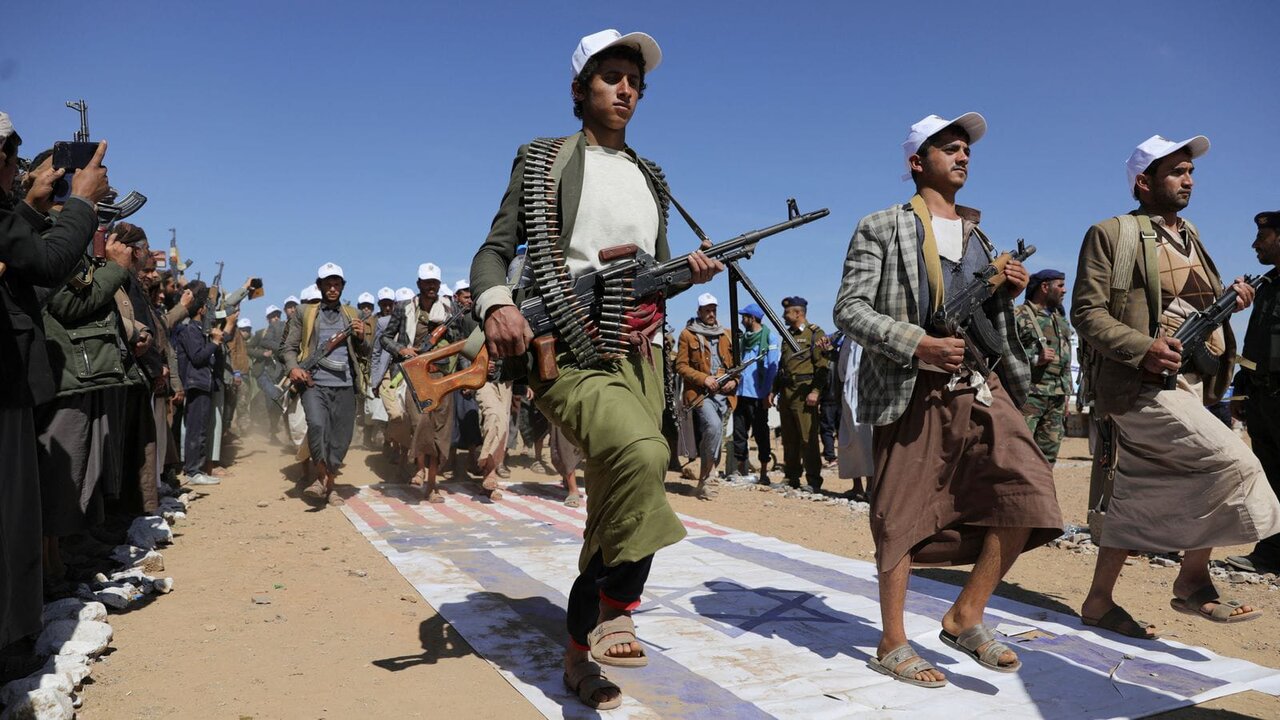
BEIRUT—The war on Yemen has never been merely an internal conflict. From its earliest stages, it has been shaped by regional and international actors seeking to redraw the country’s political and geographic map.
Among these actors, the Israeli enemy has increasingly emerged—directly and indirectly—as a beneficiary and an enabler of Yemen’s fragmentation, particularly through its convergence of interests with the UAE-backed Southern Transitional Council (STC).
A recent report by Hebrew Behadrei Haredim —revealing contacts between representatives of the STC and Israeli officials— is not an isolated development.
Rather, it fits into a broader regional pattern in which separatist or proxy forces pledge political recognition and strategic cooperation with the Israeli enemy in exchange for international legitimacy and support.
In the Yemeni case, STC representatives have reportedly offered recognition of Israel should a separate southern state be declared, expressing readiness to join the so-called “Abraham Accords.”
This proposal alone underscores the extent to which the project of southern secession is embedded within external geopolitical agendas rather than rooted in genuine Yemeni national consensus.
At the heart of this convergence lies geography. Southern Yemen overlooks some of the world’s most critical maritime corridors, including the Bab al-Mandeb Strait and the Gulf of Aden.
Control over these waterways has long been a strategic obsession for the Israeli enemy, whose doctrine prioritizes securing maritime routes connected to the Red Sea and global trade.
A fragmented Yemen—divided into weak, rival entities dependent on foreign patrons—offers a far more favorable environment for such control than a unified, sovereign state.
The STC’s rapid military expansion in Abyan, Shabwa, Aden, and most recently Hadramawt cannot be separated from this context.
Backed militarily and financially by the UAE, these operations have targeted not only rival armed formations but also key oil, gas, and port facilities.The continued shutdown of the Balhaf LNG terminal in Shabwa, Yemen’s only gas export facility, has deprived the Yemeni state of an estimated $40 billion over the past decade.
This economic strangulation weakens any central authority capable of resisting partition, while simultaneously opening space for foreign influence over Yemen’s natural wealth.
Israeli involvement, even if currently indirect, reinforces this trajectory.
By portraying the STC as a potential partner in “securing maritime routes” and countering regional adversaries, Israeli discourse reframes secession as a matter of international security rather than national disintegration.
This narrative deliberately ignores the fact that Yemeni armed operations in the Red Sea have never targeted international commercial navigation, but have been limited to ships linked to the Israeli occupation regime and its supporters, as part of Yemen’s moral and political stance in support of Gaza.
Moreover, the framing of Ansarallah and the broader Yemeni resistance as threats to global trade mirrors long-standing Israeli and Western propaganda techniques: delegitimize indigenous resistance, amplify sectarian or ideological labels, and present foreign-backed militias as forces of “stability.”
In reality, stability for the Israeli enemy means a Yemen broken into competing entities, each too weak to challenge external domination.
In this sense, Israel’s role in dividing Yemen is not necessarily one of direct military intervention, but of strategic alignment, political endorsement, and narrative warfare.
By encouraging and legitimizing separatist ambitions that serve its maritime and security interests, the occupation regime positions itself as a silent partner in the ongoing dismantling of the Yemeni state.
A unified Yemen, sovereign over its land and seas, remains incompatible with this vision, hence there is persistent push toward division.