
Strengthening Iran’s geopolitical position
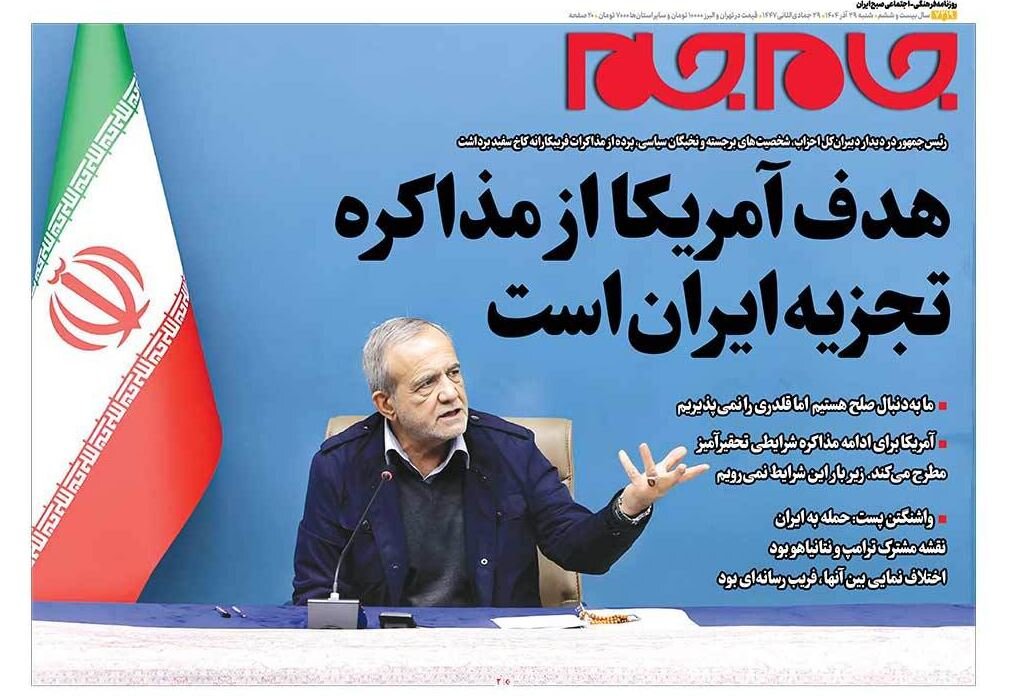
TEHRAN - Jam-e-Jam analyzed Iran’s strengthened geopolitical position through its membership in the Shanghai Cooperation Organization (SCO) and BRICS.
It wrote: Iran’s entry into the SCO and BRICS has added a new institutional dimension to its partnerships with Beijing and Moscow. This membership enables Tehran to act as a full member of the world’s largest regional blocks. It reinforces Iran’s geopolitical standing and signals to regional rivals and global powers that Tehran has integrated into alternative international frameworks beyond Western-dominated institutions. For Europe, the implications of this trend are particularly significant: closer integration of Iran with China and Russia provides Tehran with diplomatic backing and economic margins that reduce the effectiveness of Western pressure. Although Beijing prefers that Iran not escalate its nuclear activities toward weaponization, China’s strategic priorities mean it is unlikely to exert the kind of sustained and intense pressure that Europe would prefer.
Iran in the 2025 US strategy
The Iran newspaper examined Iran’s place in the United States’ 2025 National Security Strategy. According to its analysis, unlike the usual approach in previous periods, Iran is no longer designated as an immediate or high-priority threat. Only a brief reference reiterates America’s longstanding policy of rejecting Iran’s (alleged) acquisition of nuclear weapons: “The United States will not allow Iran to obtain a nuclear weapon.” The departure from the past sharp positions —such as threats of regime change, maximum sanctions, or even direct military containment—indicates a kind of conservative shift in U.S. policy toward Iran. Washington now prefers to contain Tehran indirectly, through aligned regional powers such as Israel, Saudi Arabia, and Turkey; a strategy that reduces costs and minimizes the risk of confrontation. From this perspective, Iran’s absence from the document should not be seen as neglect, but rather as a sign of “priority management” in U.S. foreign policy. In the political reality of the region, this retreat could create opportunities for de-escalation, reconfiguration of relations, and conflict management through indirect mediating channels.
Kayhan: A blow to the illusion that Israel ‘deceived’ US into war with Iran
Kayhan, in a commentary on a recent Washington Post report, argued that the report on the behind-the-scenes of the 12-day war reveals a joint deception operation between the United States and the Zionist regime. In this operation, “negotiation” was not a path to resolving disputes but rather a calculated cover for a military strike against Iran. According to Kayhan, the Washington Post report invalidates the simplistic view of those who still insist—whether before or after the 12-day war—that America was “tricked by the Zionist regime” and unwillingly dragged into the conflict, leaving room for reforming U.S. behavior and resuming negotiations. This current, which has unfortunately influenced some institutions involved in foreign policy and left traces in a limited number of diplomatic positions, suffers from a deep weakness in understanding America, international relations, and the strategic bond between Washington and Tel Aviv. This group believes that there remains hope for negotiations with the United States and the West, although they both imposed war on Iran. If such hopes take root within the government, Kayhan warns, they could inflict blows worse than the JCPOA itself.
Arman-e-Melli: Diplomacy does not stop
Seyed Jalal Sadatiyan, an international affairs analyst and former diplomat, spoke with Arman-e-Melli about the latest assessments of Iran–Europe relations. He stated: given recent developments in foreign policy, diplomacy remains one of the most important levers for reducing tensions and safeguarding national interests. The communication channels established between Iran and Europe continue to show that diplomacy can be relied upon. This process, he emphasized, never halts—even at the peak of disagreements and conflicting interests. With the activation of the “snapback mechanism” by the European troika, tensions and disagreements persist and may now have reached their peak. Sadatiyan said Europeans failed to fulfill their commitments to the JCPOA and have no defensible position; not only did they fail to honor their promises, but they also actively participated in what is called pressure on Iran. He concluded that active engagement with Europe and the smart use of differences between Europe and the United States could strengthen Iran’s position internationally, especially in fostering closer ties with Europe, and open new pathways for reducing tensions and enhancing cooperation.