
Behind Israel’s high Gaza casualties
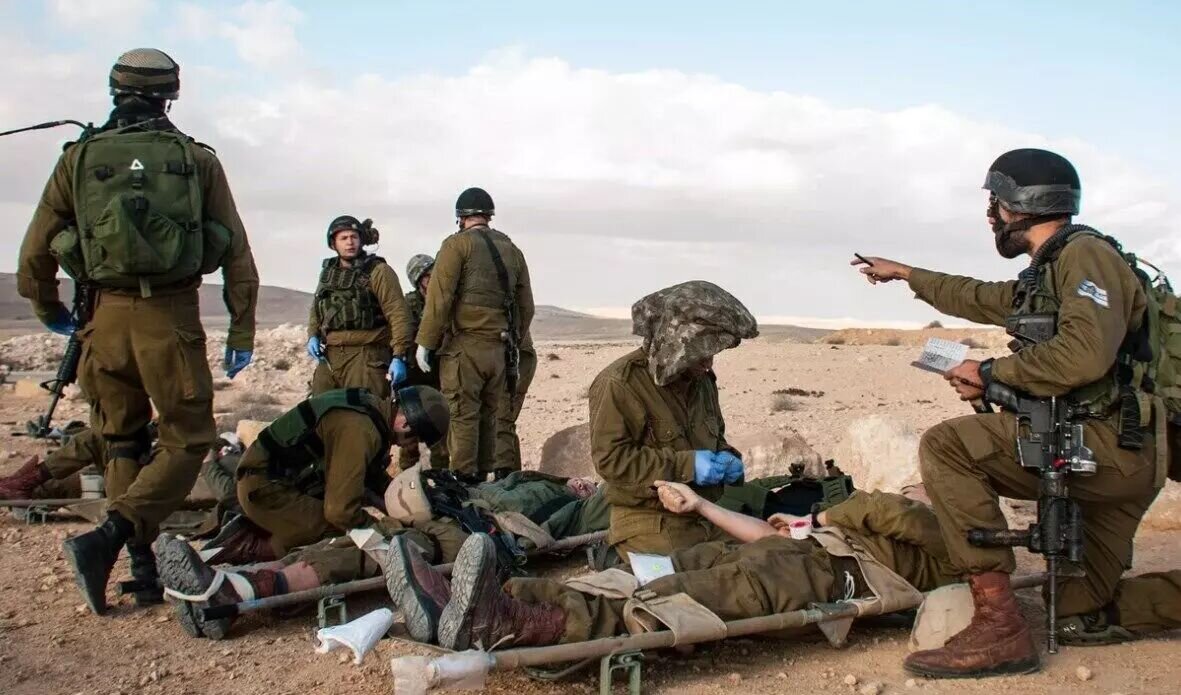
TEHRAN – The Israeli regime’s mounting wartime casualties expose a grinding battle shaped by resilient Palestinian factions and shifting battle dynamics.
More than two years into the Gaza genocide, the Zionist military’s casualty data published by Hebrew media outlets reveal a spiraling human and institutional toll, one that Israeli regime’s officials did not foresee when the genocidal war began.
The surge in wounded soldiers and the severe nature of their injuries underscore two realities the regime’s leadership has struggled to publicly acknowledge: the unexpected resilience of Palestinian resistance factions and the strategic strain of open-ended urban warfare.
According to Hebrew media, the regime’s ministry of defense has been inundated with disability and injury recognition requests since the start of the genocidal assault, pushing the system to its limits.
Around 82,400 wounded personnel are now receiving treatment, and more than a quarter were injured in the past two years of fighting in Gaza.
When Netanyahu’s regime launched its campaign in Gaza, senior Zionist officials suggested that the dismantling of Hamas would be relatively swift. Instead, the genocidal war evolved into a cycle of ground invasions, withdrawals, and renewed confrontations.
Israeli Occupation Forces (IOF) repeatedly returned to neighborhoods previously declared “cleared” only to encounter reorganized Palestinian resistance fighters employing new defensive tactics.
This adaptability has been central to the unexpectedly high IOF casualty rate. Palestinian resistance groups, including Hamas, Islamic Jihad, and smaller factions, have leveraged tunnel systems, decentralized command, and improvised explosives to neutralize the IOF’s technological superiority.
Their resilience under heavy bombardment extended the ground campaign longer than Israel anticipated.
Despite censorship on casualty figures, the scope of injuries documented by the regime’s sources to Hebrew media illustrates the intensity of ground combat:
• 873 soldiers are now confined to wheelchairs
• 1,061 soldiers are amputees
• 612 soldiers suffer from “special disabilities” rated at the most severe category.
• 115 soldiers are coping with blindness
The fastest-growing category is psychological trauma. Since October 7, 2023, roughly 22,000 newly wounded personnel have entered the rehabilitation system, 58% suffering psychological injuries.
Internal projections anticipate thousands more by 2026. Hebrew newspaper Israel Hayom estimates that by 2028 the system may be treating 100,000 injured soldiers, half battling psychological disorders.
These figures highlight an internal dilemma: the regime’s war aims require long-term troop deployments, yet long-term deployments are generating levels of trauma that the IOF cannot easily absorb.
Reasons why casualties are so high:
1. The durability of Palestinian armed factions
Despite relentless airstrikes and targeted assassinations, Gaza’s resistance fighters operated through a mix of tunnels, hardened positions, and mobile cells. Their tactics emphasized attrition, gradually exhausting the IOF rather than confronting them directly in large formations.
2. Urban warfare’s inherent asymmetry
In dense city environments, the regime’s technological advantages, such as drones, armor, and signals intelligence, offered limited protection. Small teams of Palestinian resistance fighters inflicted significant damage using locally-manufactured IEDs, anti-tank weapons, and sniper fire. The urban layout amplifies every tactical mistake.
3. Reliance on reservists
The IOF’s heavy dependence on reservists (63% of newly registered wounded) means that many frontline troops were not ready to be repeatedly pulled from their jobs or family life into high-intensity combat. Rotational fatigue, uneven training, and psychological strain heighten vulnerability.
4. A war without clear endpoints
As objectives shifted from “destroying Hamas” to “weakening Hamas” to “establishing security corridors”, IOF troops remain in Gaza for extended periods. This open-ended posture exposes them to persistent, unpredictable attacks.
A system under mounting pressure
The regime’s Rehabilitation Division’s budget has surged 53% to 8.3 billion shekels, half dedicated to psychological care. Mental-health hotline usage is up 80%. The regime’s government has now convened a special committee to redesign long-term support for a wounded population that keeps growing.
A genocidal war redefining military assumptions
Ultimately, the data reflect a deeper strategic shock. The genocidal war on Gaza has revealed that Palestinian factions can sustain prolonged resistance, impose heavy costs, and repeatedly reconstitute themselves, challenging long-held Zionist assumptions about military dominance.
The rising casualty numbers signal not just the intensity of the fighting, but the difficulty the IOF faces in achieving a decisive victory on a battlefield where its advantages are continually blunted.