
Iran's private sector ready to play leading role in strengthening economic ties with Kazakhstan
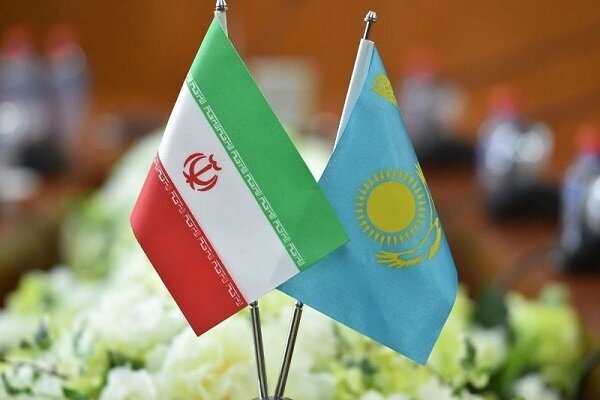
TEHRAN- Hamed Asgari, the vice president of international affairs at the Iran Chamber of Commerce, Industries, Mines and Agriculture (ICCIMA) regarding the president's trip to Kazakhstan at the head of a large trade delegation, stated: “Iran's private sector is ready to play a leading role in strengthening economic relations with Kazakhstan.”
Looking ahead to the upcoming trade delegation visit of the Iran Chamber to Kazakhstan, which is scheduled to accompany the president, Asgari described this trip as an economic turning point.
He said the extensive participation of economic actors in this trip sends a clear message: “Iran's private sector is ready to take on the main role in strengthening economic relations with Kazakhstan.”
In an interview with the Iran Chamber Online, Hamed Asgari assessed the upcoming presidential visit to Kazakhstan as a genuine economic turning point. He stated: “For the first time, over one hundred persons active in trade and economy and major companies from Iran's private sector will be present alongside the president; a combination that indicates Iran-Kazakhstan relations have moved beyond general dialogue and entered the phase of implementation and project focus.”
Regarding the trade delegation's trip to Kazakhstan accompanying the president, he said: “Over the past months, joint work has been conducted between the Iran Chamber, economic ministries, and the embassies of both countries to identify real cooperation potentials. The result of this work was the preparation of a comprehensive report on the trade and investment situation of Iran and Kazakhstan, which emphasized complementary value chains, transit routes, energy, agriculture, technical engineering services, and the connectivity of the two countries within the framework of the Eurasian Economic Union.”
Asgari added: “Within this same framework, three important memoranda of understanding, worth over 300 million euros, have been prepared for signing between Iranian companies and Kazakh counterparts. These MOUs focus on areas that both strengthen Iran's competitive advantages and meet the needs of Kazakhstan's economy; ranging from the development of logistical infrastructure to industrial projects and the export of technical and engineering services.”
He further noted: “We expect this trip, in addition to solidifying Iran's position in regional transit routes, to create a new roadmap for joint trade and investment and pave the way for a several-fold increase in bilateral exchanges between the two countries.”
Back in mid-September, Iran’s commercial attaché in Kazakhstan said that Kazakhstan continues to seek imports of petrochemical products from Iran, despite its own investment in domestic production.
Speaking at a webinar on petrochemical trade challenges between the two countries, Nasrin Pabarja outlined Kazakhstan’s market structure and said demand remains for Iranian products.
She noted that Kazakhstan, one of Central Asia’s largest economies with vast oil and gas reserves, is aiming to become a regional player in petrochemical production and exports by attracting investment and joint ventures.
Its geographic position and access to Eurasian Economic Union markets, along with proximity to China and Russia, support that ambition, she said.
Based on Iranian customs data, exports to Kazakhstan in the first four months of the year included about $6 million in petrochemical products, $3 million in mining and mineral industries, $22 million in industrial goods, and $23 million in agricultural commodities, Pabarja said.
She added that while Kazakhstan has launched multiple petrochemical projects in recent years, its output has not met domestic demand, leading to continued imports from Russia, Saudi Arabia and Iran.
Kazakhstan’s petrochemical market structure is divided into three main categories: polymers and plastics, basic chemicals, and high value-added downstream products, she explained.
Despite projects such as polyethylene production, demand for these products in industries remains high, making them among the country’s top imports, she added.
Pabarja also highlighted Kazakhstan’s potential to act as a re-export hub for Iranian petrochemical products to other Central Asian countries and China.
“Although Kazakhstan is a consumer market, its geographic and logistical advantages could turn it into a platform for re-exporting Iranian goods,” she said.
The session also reviewed challenges in Iran-Kazakhstan trade and explored the export advantages of both countries in the petrochemical sector.
In early September, Pabarja had referred to the volume of trade between the two countries, and reported an increase in exports compared to imports from Iran to Kazakhstan in the first three months of the current Iranian calendar year (March 21-June 21), as compared to the same period of time in the past year.
Pointing to Kazakhstan's suitable ranking on the list of target countries for Iranian exports, she stated: "In the first quarter of this year, over $53 million worth of goods, weighing more than 96,000 tons, were exported from Iran to Kazakhstan, while during this period, $9 million worth of goods, weighing 28,0000 tons, were imported from Kazakhstan into Iran.
According to Iran's Commercial Attaché in Kazakhstan, the main goods included sunflower seeds, corn, barley, and livestock products.
She noted that the two countries have preserved their cultural and historical commonalities, adding: "Iran and Kazakhstan are neighbors via the Caspian Sea and, alongside maritime trade, enjoy a favorable situation in road and rail connections."
Pabarja stated: "400 export goods and 19 import goods in the trade basket of Iran and Kazakhstan indicate the superiority in the diversity of export products over import items. For instance, $23 million worth of agricultural products, $22 million from the industrial sector, $5 million from petrochemical products, and over $3 million from the mining and mineral industries were exported to Kazakhstan."
In early August, Iran’s Minister of Transport and Urban Development Farzaneh Sadegh and Kazakhstan’s Minister of Transport Nurlan Sauranbayev agreed to strengthen transportation cooperation and jointly draft a roadmap focused on boosting transit through the International North–South Transport Corridor (INSTC).
The meeting took place on the sidelines of the Third UN Conference on Landlocked Developing Countries in Awaza, Turkmenistan, where both ministers stressed the need for infrastructure coordination and swift implementation of earlier multilateral agreements signed between Iran, Kazakhstan, Russia, and Turkmenistan.
Sadegh called for accelerated execution of the eastern branch of the INSTC, emphasizing Kazakhstan’s central role.
She also proposed a comprehensive five-year agreement covering all modes of transport, a suggestion welcomed by the Kazakh side.
The two sides reviewed opportunities to enhance multimodal connectivity, including rail, road, maritime, and air transport.
Sauranbayev emphasized that Kazakhstan imposes no restrictions on Iranian flights and expressed interest in collaborative infrastructure development, particularly a Caspian Sea initiative akin to the “Caspian Bridge” project being developed with Azerbaijan.
The ministers agreed to assess the full potential of Caspian Sea routes for a “leap” in logistics cooperation, aiming to diversify transit paths to and from Iranian ports.
As part of a broader goal to increase bilateral trade to $3 billion, discussions included expanding port capacity, streamlining customs, and organizing multilateral logistics meetings with neighboring countries—especially targeting routes toward the Caucasus and Europe.
In a forward-looking move, both sides agreed to form a joint technical committee tasked with drafting cooperation documents and a detailed roadmap prior to the upcoming state visit by the Iranian president to Astana.
They also agreed to hold regular virtual meetings to ensure continued progress.
These developments align with Iran’s strategy to position itself as a critical transit hub linking Central Asia to global markets via the Persian Gulf and Indian Ocean.
The 20th session of the Iran-Kazakhstan Joint Economic Committee was held in Astana, in mid-June, with the participation of Gholamreza Nouri Ghezeljeh, Iran’s Minister of Agriculture and head of the Iranian delegation.
Nouri thanked the Kazakh government, particularly Trade and Integration Minister Arman Shakkaliyev, for hosting the meeting, and expressed hope that the session would help advance the strategic partnership between the two countries.
Referring to the committee’s previous 19 sessions, Nouri said the continued meetings reflect both sides’ firm commitment to expanding bilateral ties.
Nouri announced that Iranian President Masoud Pezeshkian is expected to visit Astana soon at the official invitation of his Kazakh counterpart.
Documents finalized during the committee’s latest session will be prepared for signing during the visit.
During the meeting, the two countries agreed on several initiatives to boost economic cooperation and facilitate trade. These include the formation of a joint Iran-Kazakhstan investment working group to examine shared investment opportunities; enhanced trade and business engagement through the establishment of trade centers and co-hosted exhibitions; and the finalization of a mutual recognition agreement for Authorized Economic Operators to streamline customs procedures.
Both sides also agreed to hold a joint meeting on oil, gas, refining, and petrochemicals in the third quarter of 2025, and to explore the resumption of oil swap operations. Cooperation in agriculture will continue through joint committee meetings, with a focus on plant and animal health. The two sides also discussed expanding collaboration in the health sector, including knowledge transfer in pharmaceutical and medical equipment production, and the formation of a joint health task force.
Kazakhstan will be allocated 15 hectares of land in Iran’s Shahid Rajaee Port to establish a Kazakh transit terminal. The two countries also reviewed ways to expand multimodal transport under the International North–South Transit Corridor and strengthen logistics cooperation. Talks are also underway to launch direct flights between the two countries. Other areas under discussion included energy, banking, free trade zones, communications, technology, tourism, culture, production, industry, and mining.
At the end of the meeting, Nouri thanked the Kazakh government once again and expressed hope that the outcome would bring renewed momentum to the countries’ strategic relationship.
In a separate meeting with Kazakhstan’s Agriculture Minister Aidarbek Saparov, Nouri said Iran is pursuing a policy of deepening relations with the friendly nation of Kazakhstan.
He pointed to recent presidential visits and high-level meetings as signs of a strong political will to strengthen ties.
Nouri said Kazakhstan’s use of Iranian infrastructure, including east-west and north-south transit corridors and ports, is of strategic importance, as is closer agricultural cooperation.
He noted that Iran could import agricultural and food products from Kazakhstan and supply the Kazakh market with dairy and other goods in return.
He also stressed the potential for broader agricultural collaboration through the exchange of expertise and research.
Saparov said agricultural cooperation with Iran is a priority for Kazakhstan and noted that bilateral agricultural trade grew by 33 percent in 2024, reaching $20 million.
He added that agricultural financing in Kazakhstan has increased tenfold this year and expressed readiness to expand collaboration and achieve positive results with Iran.
Iran and Kazakhstan pledged deeper cooperation in agriculture to ensure sustainable development and food security, Iran’s agriculture minister said during the opening ceremony of the Central Asia Products Expo (Expo Goods) in Astana, on June 10.
Speaking at the event, Nouri Ghezeljeh emphasized the growing importance of food security amid climate change and environmental crises.
“In today’s world, the need for food security is more pressing than ever, particularly as we face escalating climate disruptions and ecological challenges,” he said.
Nouri stressed that sustainable development must be viewed not only from an economic lens but also through its social and environmental dimensions. He called on regional countries to enhance multilateral cooperation and improve resource efficiency to meet these challenges.
Highlighting Iran’s agricultural potential, Nouri said the country produces more than 130 million tons of agricultural products annually, thanks to its fertile lands and diverse climate. “We’ve also made significant strides in developing agricultural processing and value-added industries,” he added.
Of that output, over 10 million tons are exported to various countries. Nouri said Iran, with its population of nearly 90 million and a dynamic economy, also imports agricultural products and inputs—a trade flow that presents opportunities for both bilateral and multilateral commercial expansion.
He pointed to Iran’s deep-rooted cultural, religious, and economic ties with neighboring countries, particularly Kazakhstan and Pakistan. As co-chair of the Iran-Kazakhstan Joint Economic Committee alongside Kazakh Minister Almas Shakaliyev, Nouri underscored Tehran’s commitment to strengthening comprehensive cooperation.
MA